
A comprehensive Guide on Polygon Use Cases
The concept of decentralization is the biggest innovation of the twenty-first century brought by blockchain technology. A few problems surfaced after the increasing adoption, but Polygon use cases have resolved some of these issues.


The vast magnitude of advancements in the area of cryptocurrencies and blockchain applications have brought numerous advantages and difficulties. Through decentralization, blockchain technology brought about observable benefits in productivity and corporate performance. The world of finance has seen substantial changes because of cryptocurrencies. At the same time, a rise in volume and value has led to several setbacks, highlighting the need for Polygon use cases.
Network congestion and increasing transaction costs are issues that many cryptocurrency and blockchain customers, buyers, and companies have had to deal with. The Polygon Network is one example of a layer 2 scaling solution that has emerged as a dependable response to these issues.
Why are Layer-2 Solutions important?
In essence, layer 2 solutions relate to blockchain systems that operate concurrently with the primary network. The Ethereum platform serves as the primary blockchain in the instance of Polygon. While strictly adhering to processing payments outside the primary blockchain system, the layer 2 blockchain operates side-by-side with it. A smaller network load allows the advantages of reduced fees for transactions and faster transaction times.
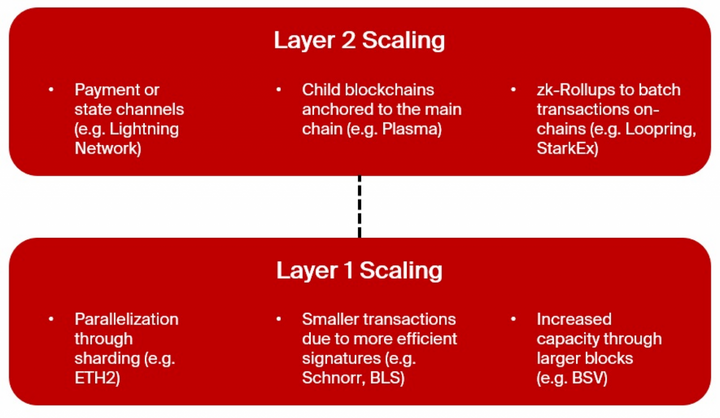
Layer-1 vs Layer-2
Layer 2 approaches can successfully establish a path of dialogue between the two systems to exchange tokens and information. They can aid in the transfer of transaction records from the primary blockchain to the counterpart blockchain system. This facilitates faster and cheaper transaction execution while posing no security risks to the Ethereum mainnet.
How it functions greatly influences the recent rise of interest in Polygon use cases. The most popular platform for developers looking to build decentralized applications is Ethereum. It offers the advantages of cutting-edge equipment as well as a sizable and extremely secure infrastructure. Unfortunately, Ethereum's prominence as a platform for creating dApps and DeFi services has become problematic.
The network has been congested, which has reduced bandwidth for Ethereum due to the high demand for transactions. Now that the network is congested, increased transaction fees apply, making the Ethereum blockchain available only to investment firms. Since layer 2 systems like Polygon have the advantages of flexibility and compatibility, they are very important for the development of DeFi.
How Does Polygon Function?
With network nodes, staking, governance, and other processes, Polygon Network functions similarly to many other Proof-of-Stake-based systems. Here is a detailed overview of the various crucial elements that make a Polygon function.
Proof of Stake (PoS)
The Polygon Platform's use of the Proof of Stake agreement is its primary selling point. A group of network verifiers is crucial to the Proof of Stake consensus since they verify and validate various transaction batches. Polygon use cases can ensure the effective use of processing resources for building new blocks rather than the use of the conventional energy-intensive Proof of Work consensus mechanism.
The Proof of Stake consensus requires token holders to validate and confirm transactions. Users who use MATIC tokens are guaranteed rewards by the PoS mechanism. Users can opt to receive MATIC tokens as validators or delegators, suggesting an incentive-based network security paradigm.
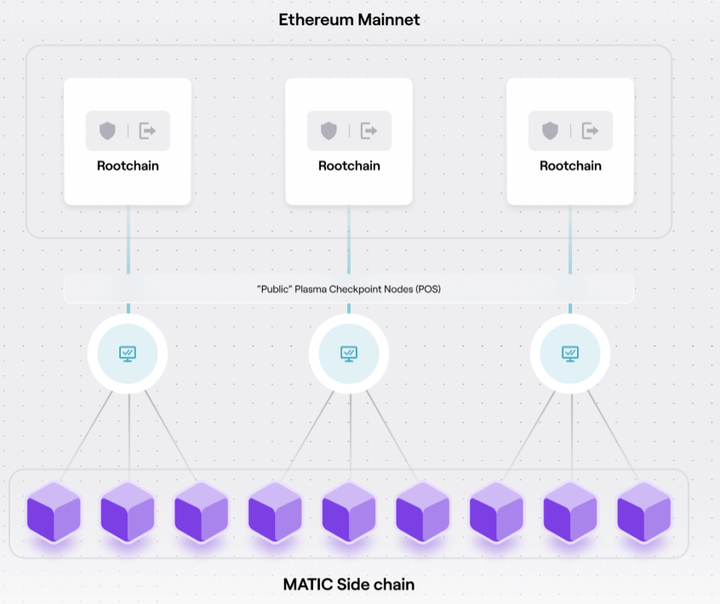
Source: Polygon. Technology
A whole network devoted to blockchain transaction validation requires persons to validate transactions. In exchange for successfully verifying transactions, validators can receive a portion of the transaction costs. In addition, validators would be compensated with freshly created MATIC tokens. On the other hand, unethical behavior on the part of verifiers could incur consequences like a reduction in MATIC incentives.
In the Polygon blockchain use scenarios, delegators are essentially a specific type of public node. They can accept other people's MATIC and utilize it to verify transactions.The delegators’ voting authority is directly correlated with the amount of stake they have assigned. Although they only receive modest incentives, delegators are not subject to the same difficulties as node validators.
Polygon Bridge
Polygon’s Proof of Stake bridge offers a customizable path between two blockchain systems. The Proof of Stake Bridge is basically a group of smart contracts that facilitate the movement of resources from the Ethereum platform to the Polygon side chain.
The PoS Bridge plays a significant role in the movement of assets from the Ethereum blockchain to the Polygon Network, which depends heavily on it. The transmitted assets are necessary for communicating with the many Polygon Network-affiliated decentralized applications and DeFi venues.
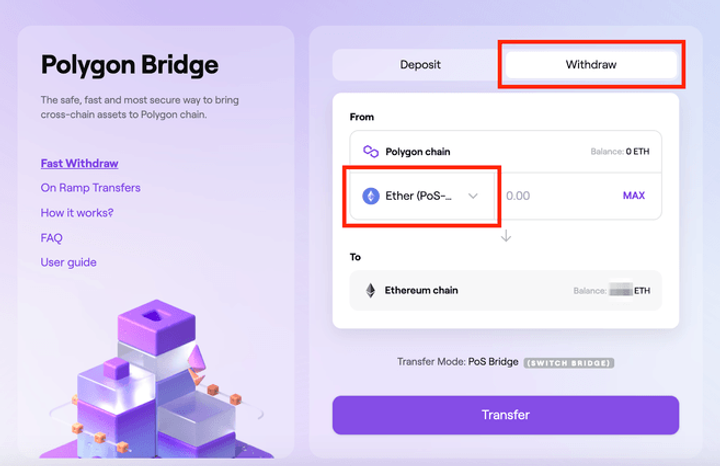
Polygon Bridge
Polygon Use Cases
The way Polygon Network operates provides a quick outline of its skills to ensure quicker and more affordable transactions. Recently, talks about Polygon's applications have surfaced, with a focus on its use as a scalability solution. However, based on its capacity to offer higher scalability in blockchain networks, Polygon can cater to a variety of use cases.
Despite its lack of hefty charges and the Ethereum blockchain's sluggish transaction speeds, Polygon provides essentially the same usefulness. With a larger and more intricate ecology, the Polygon Network has developed into much more than just a straightforward scaling solution. Users and developers alike could investigate a wide variety of use cases, such as becoming delegators or node validators.
Polygon use cases include the implementation of blockchain systems that enable Ethereum as well as the use of decentralized apps built on Ethereum. Polygon also assists in the creation of NFTs and MATIC stake assets. Polygon has proved useful even in well-known projects like yield farming techniques, Curve Finance, or Aave. Decentralized exchanges like SushiSwap also make use of the Polygon Network.
As an alternative to the Ethereum blockchain, Polygon can act as the foundational blockchain for several DeFi protocols. Investors can depend on Polygon each moment they participate in NFTs because OpenSea supports the decision to utilize it as the primary network instead of Ethereum.
Digital Payments
Online payment applications are among Polygon's important use cases. The Polygon Network's fundamental architecture offers significant benefits for decentralized applications that aid in accelerating payments. Decentralized apps can benefit from almost real-time payment settlement features because of Polygon.
Utilizing a software development kit (SDK) and specific application programming interface (API) integration, the network offers increases in transaction speed. The method allows decentralized applications, consumers, and businesses to receive fast payments in any coin format. The Polygon Network now intends to transform three distinct aspects of digital payment use cases for decentralized apps.
NFTs
Among the Polygon blockchain application scenarios, the most interesting entry is NFT trading. The Polygon Network promises cheap transaction fees for buying and selling NFTs. The most crucial benefit is that it facilitates NFT purchases through OpenSea, the biggest and most well-known NFT marketplace.
On the Polygon Network, users can now create, buy, or exchange non-fungible tokens. They can set up their Metamask cryptocurrency wallet to operate on the Polygon Network and use MATIC to cover processing fees.
DeFi Services
The DeFi industry will be significantly impacted by Polygon use cases. Currently, Polygon is developing a system that will enable businesses to assess the creditworthiness of participants. As part of the process, users' transaction histories are evaluated to determine their credit scores.
Additionally, Polygon estimates the total value locked, or TVL, in the DeFi space to be close to $5 billion. The DeFi ecosystem and the widespread usage of Polygon for accessing dApps have fueled the network's expansion. Due to its effectiveness in decentralized finance, it has drawn closer to its leading rivals Ethereum and Binance Smart Chain.
The fundamental factor in Polygon's continued growth is its inclusion on the two largest DeFi platforms Compound and Aave. In fact, Aave, the DeFi lending protocol, has more than $1 billion in liquidity secured on Polygon marketplaces, including more than 8000 customers. Users can communicate easily across various DeFi platforms thanks to Polygon's robust and compatible architecture.
Gaming
In July 2021, Polygon created the Polygon Studios section to move video games from web 2.0 to web 3.0. The new section aims to help game creators who are interested in using Polygon. Polygon Studios can ensure that creators will receive aid in marketing help, community engagement, and funding. One of the best platforms for game producers in the blockchain gaming industry is Polygon.
The network's capacity for scalability greatly determines how well Polygon use cases perform in gaming. It may aid in improving the quality and efficiency of blockchain-based gaming. In terms of network latency and slower transaction rates, blockchain games now lag considerably behind conventional PC and console games. Polygon Network can resolve these lag issues for gaming firms.
Conclusion
Polygon is a distinct layer 2 scaling solution with a native token that has been developed for many use cases. If you pay close attention, all Polygon use cases make use of various features.
The ability for making, purchasing, and exchanging NFTs makes it suitable for use cases like NFT and gaming. NFTs can be communicated using OpenSea on the Polygon Network. Due to a large number of decentralized applications and DeFi platforms that run on Polygon, it is no longer just a scaling solution.
Discover more from CoinageReport
Subscribe to get the latest posts sent to your email.
This article is for informational purposes only and is not financial advice.


