
Biggest Ethereum killers in the crypto ecosystem
Ethereum has been plagued by scalability and high gas fees problems. Such issues in the second largest network have provided a perfect opportunity to Ethereum killers in the crypto ecosystem. Let’s analyze the problems in the Ethereum network and the solutions offered by several digital assets in the crypto market.


Ethereum launched in 2015 as the first blockchain built specifically for smart contracts, and it’s remained the dominant platform for developers ever since. That dominance hasn’t stopped a long line of challengers from trying to take its place.
Problems In Ethereum Network
Let’s analyze the problems one by one:
1. For Ethereum, scalability is a serious problem. As the number of users increases, Ethereum’s Proof-of-Work mechanism has become old and can now only process 13 TPS (Transactions per second). These low transactions per second result in high gas fees for the network.
2. Another problem with the Ethereum network is its issue of sustainability, related to the high energy consumption due to the Proof of Work (PoW) mechanism.
3. The interoperability problem restricts other blockchain users from connecting with the Ethereum ecosystem without a pre-arranged link.
These are some of the issues that competitors are solving by implementing newer concepts such as the following.
Cardano (ADA)
Since its 2017 introduction, Cardono has gained a reputation as one of the best-liked and anticipated Ethereum rivals. Cardano is envisioned as a blockchain that supports DApps and Smart contracts and has features for 'Smart Contracts' to function.
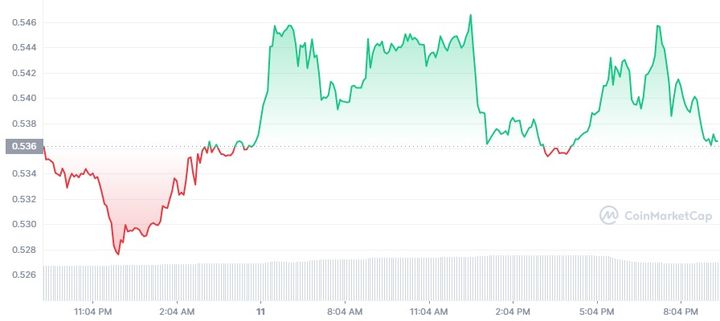
Based on a limited (or, more accurately, deflationary) premise, Cardano's cryptocurrency incentive token, ADA, has a fixed coin supply. This implies that demand will ultimately increase irrespective of how things develop in this environment. Additionally, Cardano places a strong emphasis on the Proof-of-Stake consensus process, which is anticipated to be exceptionally durable and environmentally benign.
Solana (SOL)
In contrast to the 10-second and 10-minute limits of Ethereum and Bitcoin, Solana offers a lightning-fast 400-millisecond block period. Smart contracts are already supported by it. The ecosystem already has the NFT known as the "Degenerative Ape Academy."
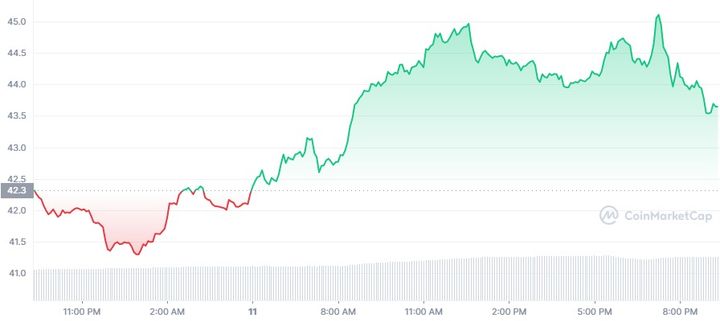
Solana is known as the "Ethereum Killer" because of its better speed and scalability ecosystem. Solana is a considerably speedier blockchain than some of its rivals since it also supports Sea Level, a technique for managing multiple smart contracts.
Polkadot (DOT)
Polkadot was first linked to the Web3 arch. To put it simply, Polkadot links many chains together to increase significantly the security and scalability of the network. Developers can build their own blockchains, known as Parachains, using the Polkadot ecosystem. Transactions on these blockchains are fast and scaled using Polkadot's relay.
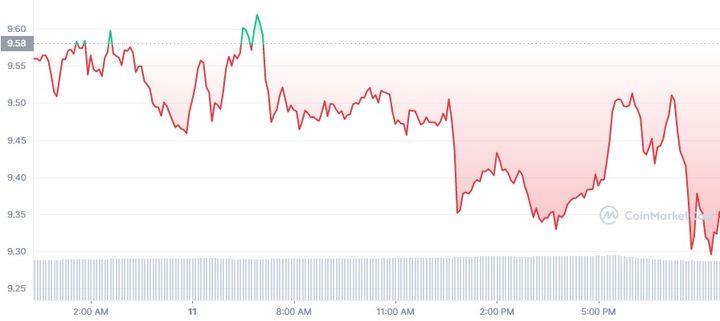
As of now, the scalability and governance of the second largest platform are under Polkadot's control. The Parachain relaying idea also offers improved interoperability. Arguably Polkadot's most distinctive feature is the absence of hard forks, since the blockchain is forkless and cannot split.
Avalanche (AVAX)
Avalanche is a blockchain made up of the X, P, and C chains. Together, the chains—which manage token generation, smart contracts, and proof-of-stake validation—generally do the same task as Ethereum; it's another blockchain for smart contracts, but one that is quicker and less expensive.
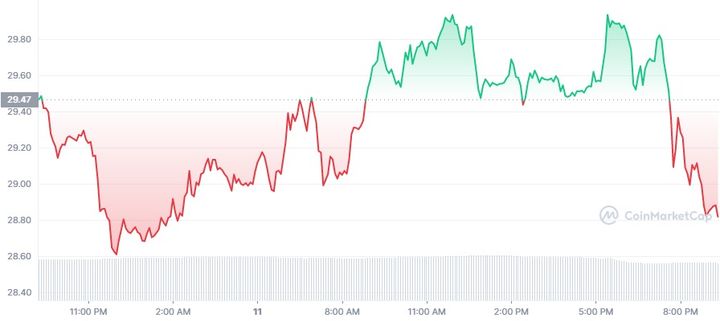
AVAX, the native token of the network, had a sharp increase in value in 2021 because of substantial investments from organizations like Three Arrows Capital.
Concluding Thoughts
For all the competition, Ethereum still hosts more than 80% of all decentralized applications — a lead in market size and adoption that its self-styled “killers” have yet to seriously threaten.
Discover more from CoinageReport
Subscribe to get the latest posts sent to your email.
This article is for informational purposes only and is not financial advice.


