
Blockchain Bridges: Why are they critical for the Crypto Ecosystem?
The increasing ecosystem of crypto assets requires interoperability of the blockchain networks. Blockchain bridges offer a way for several networks to communicate with each other.


Since the Bitcoin whitepaper's presentation to the public in 2008, blockchain technology has traveled quite a distance. An entirely new industry has been developed as a result of the following increase in the number of cryptocurrencies and the growth of blockchain networks with programmability, like Ethereum. Blockchain promises the benefits of decentralization and freedom from any type of centralized authority.
The bulk of blockchain systems, however, operate as autonomous communities with separate currencies. Blockchain bridges are becoming one of the unavoidable requirements for the ecosystem of decentralized applications. Decentralization, the fundamental tenet of blockchain technology, is constrained by the prohibition of interactions between various blockchain networks.
What are Blockchain Bridges?
Finding the meaning of one is one of the first things you should do before searching for the finest blockchain bridges. Market confidence in the DeFi industry is growing over time. As a result, the network of dapps is progressively advancing the usage of a blockchain bridge.
The blockchain bridge joins two different blockchain platforms or systems, just like physical bridges do. A blockchain bridge, often known as a "cross-chain bridge," can operate in a variety of ways. It can make it easier for assets and data to migrate continuously across layer 1 and layer 2 networks as well as between various blockchain networks.
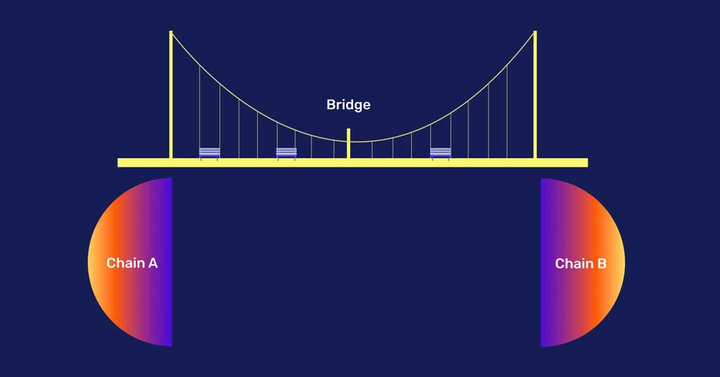
Blockchain Bridge
Each blockchain initiative has distinctive defining criteria that are particular to the project and cause interconnection issues. The established solution to this issue is a blockchain bridge, which can be used to move various transactions and data sets in either a permissionless, trustworthy, bidirectional, or unidirectional manner. A blockchain bridge can function by exchanging decentralized identities, off-chain data, and calls to smart contracts.
Is there a demand for these Bridges?
Your curiosity about how blockchain bridges operate and the best examples of them must have been stirred by the basics of a blockchain bridge. By going back to the foundations of blockchain, you can discover the answers to "how blockchain bridges operate." Blockchain networks have a vast network of nodes that communicate with one another in a secure environment to monitor, verify, and store financial transactions and data transfers.
Blockchain networks are distinguished from one another and form diverse communities as a result of their unique characteristics. As an illustration, every blockchain network has a consensus model, which is essential for ensuring that all nodes can concur on particular transactions. Although it costs more in energy, the PoW or traditional consensus protocol offers higher protection. New blockchain networks have therefore been developing with the use of cutting-edge consensus techniques like Proof of Stake.
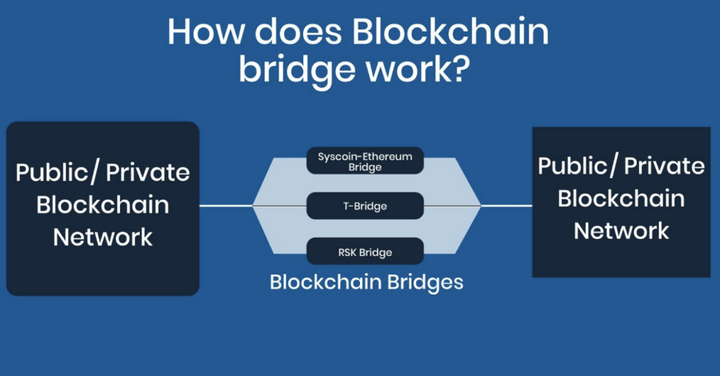
Blockchain Bridge Working
As new blockchain networks grew, they concentrated on ensuring the synergies of decentralization, scalability, and security. Because of the enormous barriers between various blockchain networks and ecosystems, it is urgent for blockchain bridges to determine the direction of the blockchain landscape.
Various pieces of software are deployed by blockchain networks to assist programmers in distributing apps, coins, and smart contracts over a system. Additionally, each blockchain network has its own architecture and standards for currencies, providing growth potential. Bridges are required due to the growth of blockchain projects, such as those in the DeFi environment. Clients will want resource interconnectivity across various networks as the number of DeFi initiatives grows in the future. The cornerstone for improving interconnectivity among the dApps and cryptocurrency ecosystems is a blockchain bridge.
Types of Blockchain Bridges
A thorough understanding of a blockchain bridge's significance can be seen in the description and underlying logic. You must also be unsure about the various blockchain bridge kinds and how they operate. A breakdown of the many blockchain bridge variations could provide more insight into their work. What makes a blockchain bridge unique? Blockchain bridges contain unique characteristics, much like blockchain networks do, which serve as defining parameters.
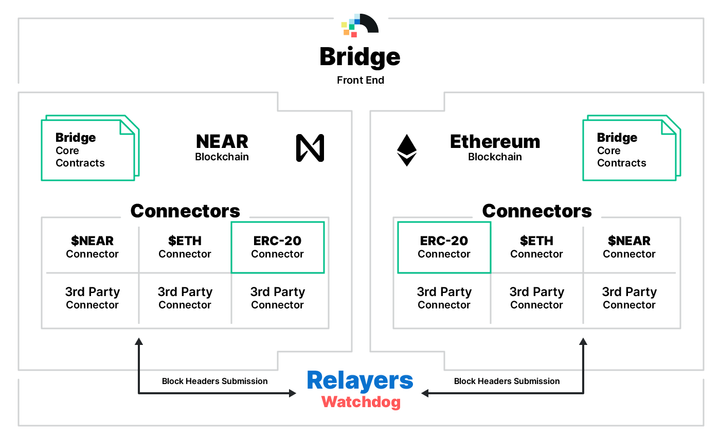
Source: Near Protocol
Trusted Bridges
A trusted blockchain bridge would be the first form of blockchain bridge listed. It is essentially a system that is controlled by a single user, entity, or method. Users must respect the identity or reputation of a centralized bridge to place assets on it, earning the name "trusted blockchain bridge." Trusted blockchain bridge instances have demonstrated user-friendly user interfaces, which can help to attract more users.
Trustless Bridges
A trustless blockchain bridge is the second type of connection for blockchain networks. The permissionless version uses techniques and smart contracts via a blockchain network as opposed to a trusted blockchain bridge. A trustless blockchain bridge is therefore not dependent on any central custodians or middlemen.
Users are not required to entrust centralized control with the management of their assets. A trustless bridge also provides clarity by utilizing the benefits of mathematics, computer science, and encryption for transaction security. Additionally, users are in total control of their assets at all times.
Unidirectional Bridges
Unidirectional bridges would appear as the next type of blockchain bridge under the heading. The flow of activities is considered by unidirectional bridges. Unidirectional bridges can guarantee only property movements that are unchangeable from one channel to another, as the name suggests. Only one-way transactions should be used with these kinds of bridges.
Bidirectional Bridges
Another type of blockchain bridge that operates in direct opposition to unidirectional bridges is the bidirectional bridge. A blockchain bridge that is bidirectional aids in assuring smooth asset and data flow between two networks. Employing two different unidirectional bridges is preferable to using bidirectional bridges.
Usage of Blockchain Bridges
Blockchain bridges' unique features and adaptations show their significance for the development of blockchain technology. Bridges present a possible method for fluidly switching between various blockchain networks. Along with the blockchain systems it connects, a blockchain bridge's value can also assist traders and programmers. Blockchain bridges may present higher chances for user growth as well as additional chances for asset production and transfer.
People can communicate with other blockchain systems and the apps that run on them. Holders of Bitcoin, for instance, might engage with programs in the Ethereum ecosystem. To get the most out of applications on various blockchain systems, customers can also depend on the bridge. Resources from primary blockchain networks can be used more effectively on layer 2 networks thanks to the deployment of the best blockchain bridges.
Blockchain bridges can provide definite benefits for scalability while lowering transaction fees, as layer 2 solutions provide more affordable and rapid transactions.
To reach promised value gains, developers can also rely on the fundamentals of how blockchain bridges operate. The features of a blockchain bridge that are built into dApps may aid in obtaining the advantages and benefits of various blockchain networks. Bridges can inspire programmers to create cutting-edge designs for decentralized systems by providing interoperability, scalability, and utility.
Downside of Bridges
Blockchain bridges do have some restrictions, though. Hackers have taken advantage of several blockchain bridges' smart contracts' weaknesses. Bad actors have taken enormous amounts of cryptocurrency from cross-chain bridges.
Users of custody bridges may be subject to custody hazards. It is theoretically possible for the central organization to hide a custodial bridge to syphon off user money. When employing custodial bridges, choose well-known companies with a proven track record. Transaction rate constraints are a possible additional technical constraint. Large-scale blockchain connectivity may be hampered by a single chain's limitation in bandwidth.
Conclusion
The web's great compatibility is one of the reasons it is a groundbreaking system. Improving connectivity and high acceptance of the blockchain sector requires blockchain bridges. They have made it possible for consumers to swap funds between numerous blockchain protocols, which has enabled some crucial improvements. The number of bridges and users and overall transaction volume for blockchain bridges have all increased dramatically.
Discover more from CoinageReport
Subscribe to get the latest posts sent to your email.
This article is for informational purposes only and is not financial advice.


