
Crypto Winter | Here’s what Crypto Investors Should Do to Survive this cycle
Crypto winter seems to be engulfing the whole crypto market with major losses to crypto investors. The sideways moment of the major assets like Bitcoin is confirming that we are officially in a crypto market winter.


2022 has been terrible for crypto investors. A flagship currency and other virtual currencies have been crushed by financial market unrest, inflicting pain and precipitating a fall that has driven countless traders running for escape.
After a prolonged market movement saw the crypto market cap reach $3 trillion in late 2021, Bitcoin and other crypto assets have suffered a drop. Currently, the market valuation is slightly above $1 trillion, and both Ethereum and Bitcoin are trading at values that are more than 70% below their all-time highs.
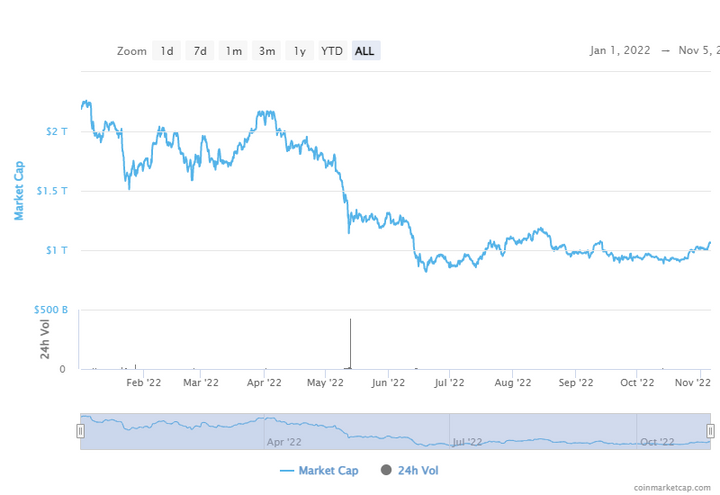
Global Crypto Market Cap
Most enthusiastic supporters of cryptocurrency have been confronted with difficulties this year, but early crypto investors have grown accustomed to extremely high fluctuation on both sides. The popularity of cryptocurrencies has traditionally increased every 4 years as more users have become aware of the technology, but these price rallies have always been followed by devastating crashes.
These periods of collapse are named "crypto winter" phases, characterized by sharp drops in demand and economic trends, as well as project shutdowns and enormous selloffs. Bear markets are not welcomed by several crypto investors, but these can be great opportunities to take a break and assess the situation before the next market cycle.
Let’s start with the concept of crypto winter.
What is a Crypto Winter?
The bear market in the cryptocurrency industry is referred to as "crypto winter." However, there is one significant distinction between a bear market and a crypto winter. A bear market is when the industry is declining, while a crypto winter is when it is moving horizontally with no movement.

According to this definition, a trader would experience neutral profits during a crypto winter and capital losses throughout a crypto winter. Most investors might have experienced flat or at worst below-average gains in their investments as the sector somewhat regained its declines during the recent months.
How to Identify a Crypto Winter?
Investors frequently lose interest in the cryptocurrency industry during these "winters" when gains are stifled. For crypto investors not be sure about the current market situation, it effectively turns into a long game. The present crypto winter may continue for a year or more.
Bear markets in the stock market are analogous to crypto winters in that they are essentially a part of the cryptocurrency industry. If we analyze the current winter cycle we can easily identify a pattern. People are not as enthusiastic about crypto as they were in 2021.
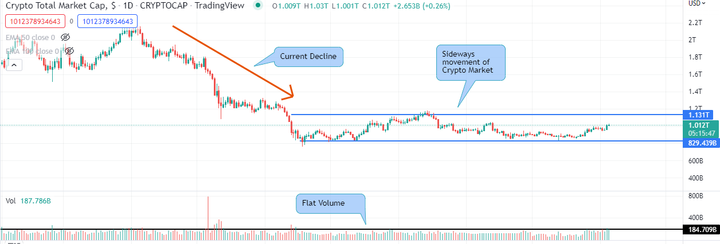
Current Winter Cycle
We have seen flat trading of crypto assets like Bitcoin for the past several months. CryptoQuant reports that Bitcoin volatility has dropped to its lowest in the past several months. There is no specific timeline for the end of crypto winter. We haven’t seen major spikes in the trading volume of the crypto market.
Let’s look at a brief history of the crypto winter in the crypto market:
Previous Winters in the crypto market
The cryptocurrency industry is experiencing a winter cycle in 2022, but it's not the first time. January 2018 to the middle of December 2020 was the preceding cryptocurrency winter. It followed the 2017 bullish trend, which received extensive media coverage as a balloon with an elevated danger of popping.
According to CoinMarketCap data, Bitcoin underwent a steep dip after reaching $20,000 for the first time on December 17, 2017, and it remained underneath this level until December 16, 2020, when it climbed above $21,000.
Bitcoin fell 30% between December 2017 and January 2018. By the end of the year, BTC had fallen by 80% from its record high on December 17. However, in December 2017, Ethereum reached $500, and in January 2018, it crossed $1,000.
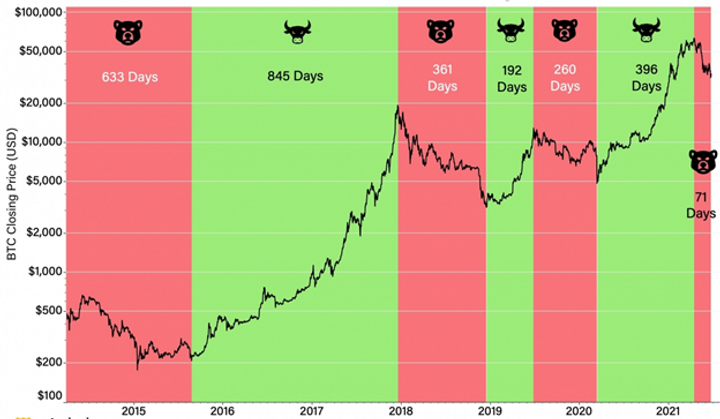
History of Crypto Winter
The following month it began gradually declining, and it didn't reach $1,000 again until January 2021. The 2018–2020 crypto winter saw significant declines in a wide range of other cryptocurrencies. It was the second winter for crypto.
Some individuals believe that 2014 and later marked the beginning of the crypto winter. In January 2014, one bitcoin was worth little more than $1,000. Prices fell the following day and stayed below $1,000, never rising again until February 2017.
The Current Winter is different. How?
Crypto winters depend on the current overall economy; thus, they are not always the same. Since cryptocurrency is starting to exhibit a strong association with the regular markets, the current 2022 crypto winter may be unique.
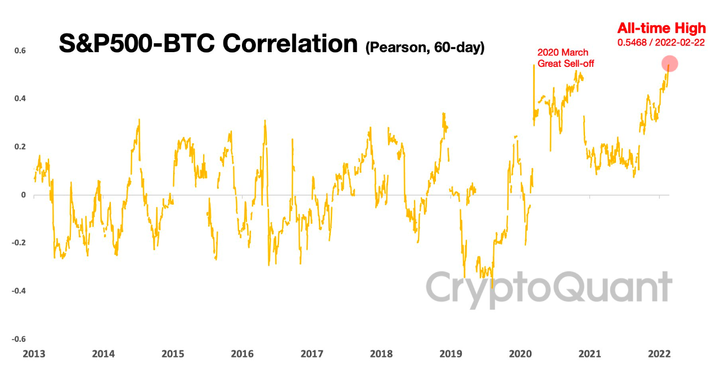
Strong Correlation
For most of its existence, for example, Bitcoin has exhibited no association with the S&P 500 and other commodities like gold. But a similarity between BTC and the S&P 500 index started to appear in the final period of 2021. In Q1 and Q2 of 2022, the asset classes remained connected.
Therefore, it is likely that Bitcoin will also be impacted by the U.S. Federal Reserve's attempts to manage rising prices by raising interest rates, just as the financial sector is.
The fact that virtual currencies are capturing more people's attention than ever before may also make this crypto winter special. Aside from that, as major Wall Street institutions like J.P. Morgan and Goldman Sachs embrace virtual currencies, they have become a global phenomenon.
More individuals are becoming aware of the crypto market because of its growing widespread acceptance across several sectors. As a result, cryptocurrencies are more widely known than they were during previous crypto winters. This could indicate that more individuals are purchasing the decline and that the current crypto winter may not last as long as anticipated.
How Crypto Investors Can Survive this Winter?
The procedures to take to withstand a cryptocurrency winter are similar to those to take in a stock market decline. To ensure their portfolios are in excellent condition for the forthcoming cryptocurrency winter hits, professionals recommend that crypto investors take the following steps as they prepare for the industry to recover:
Don’t Quit
Although the cryptocurrency winter can be difficult, it's necessary to keep in mind that some investors genuinely become wealthy during downturn markets. Due to two factors, this is particularly true with crypto.
One is that bear markets wipe out initiatives with weak foundations, poor product-market compatibility, or blatant frauds. The industry shifts its attention away from asset prices, promotion, and excitement and toward products and company growth simultaneously.
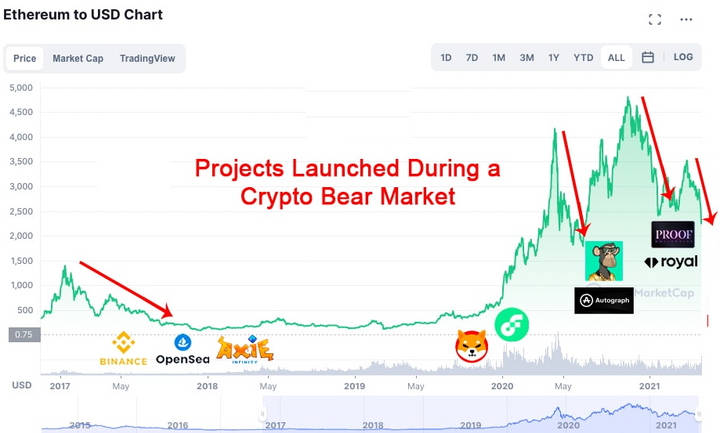
Winter Brings Innovation
Solana, Cosmos, and Uniswap projects are a few of the finest cryptocurrency projects that were developed and introduced within a bear market. Ethereum was introduced during the bear market for BTC in 2015 and remained under $10 until the 2017 boom phase.
Being an early adopter of the cryptocurrency space also entails remaining active, educating, and thinking when the market is going through a bad phase. Those who persevered during the 2014–2016 market correction were among the most profitable crypto investors in the 2017 price surge.
Many people who prospered in 2021 persevered through the challenging decline of 2018, 2019, and 2020. The most important element for survival whenever the market flips around is perseverance.
Re-evaluate Your Strategy
Although operating at a loss is never enjoyable, it can be a learning opportunity. Investors should take advantage of the cryptocurrency winter to review their investing strategy, learn from any errors they committed during the previous cycle, and get ready for the forthcoming bull run.
New perspectives could be indicated by a commodity or a whole group of assets falling 70% from all-time highs. Traders may have to reconsider their strategy and rebuild their accounts to better capture the new normal if they experience a big drop in their holdings, for instance, which could indicate that the industry has rejected their investment philosophy. If this is the case, it could be wise to take a loss and make other purchases.
Make Data-Driven Decisions
For catering to new changes in the sector, it's crucial to follow recent reports in both the conventional and cryptocurrency sector. For instance, the most recent information from Powell's Jackson Hole address suggested that higher rates will be maintained further to stabilize prices, which caused the cryptocurrency market to decline by only 6%— less than many observers might have anticipated. As a result of this fairly bad news, BTC is proving to be resilient.
By catching up on the latest happenings in the crypto ecosystem, you will be able to make better decisions. Keep an eye on the overall financial sector and then change your investment strategy accordingly.
Portfolio Diversification
Portfolio diversification is another major factor that can assist you in combating the bear market. Portfolio diversification is important, so avoid putting all of your assets in just one venue. Since these assets have lower costs, or charges, which are ideal for all consumers, professionals typically advise buying in low-cost, diverse asset classes. According to professionals, you should devote only 5% of your entire investment capital to cryptocurrency as it is a risky game.
Bottom Line
Crypto investors should never forget that so many asset managers still view cryptocurrency as a big risk. It's crucial to put into the cryptocurrency market only money that you're willing to lose. Many professionals find it problematic to speak of cryptocurrencies as assets, let alone as a class of assets. Recognize the distinction between investing and gambling. Do your own research before investing!
Discover more from CoinageReport
Subscribe to get the latest posts sent to your email.
This article is for informational purposes only and is not financial advice.


