
Digital Identity: Why is it Crucial in Web3 Revolution
We are going through the most exciting times of this century with innovative technologies making their way into our daily lives. Digital Identity is one of the key components necessary for the revolution of Web3.


The last couple of years has seen rapid expansion in the Web3 sector. Decentralized autonomous organizations (DAOs), non-fungible tokens (NFTs), and decentralized finance (DeFi), to mention a few, are attracting a lot of financing and press coverage. Furthermore, these industries are probably going to keep expanding. But in the background of these ideas, we discover the intriguing idea of Digital identity. For Web3 development and the entire space to achieve the full benefits of decentralization, users must have a Web3 Digital identity.
This post will therefore cover everything you should know about Web3 identification! We will begin the discussion by looking more closely at authentication and identities from the perspective of Web2 to better grasp what a Web3 identity is. We shall examine some of the old model's shortcomings in the process. Then, we'll talk about what a Web3 identity is and why the Web3 ecosystem needs them.
The Era of Password and Username
There was no natural identification level for individuals at the beginning of the internet. As a result, the numerous applications and websites on the internet were in charge of managing user identity. This strategy was suitable at the time given the state of technology and the user base. But with billions of people using the internet, this system's shortcomings are now more obvious than ever.
Despite being consistently shown to be flawed and dangerous, a system that is based on usernames and passwords has long been the norm. Additionally, having to manage many passwords for various websites makes for a poor consumer experience. This is evident because multimillion-dollar companies exist solely to assist people in managing their dispersed accounts.
However, people's lack of ownership over their identities and data—rather than a bad user experience—is the real problem. People essentially lease their identities from central organizations like big corporations and firms. They are then vulnerable to the dangers of aggregation, such as espionage, restriction, deception, and even information leakage.
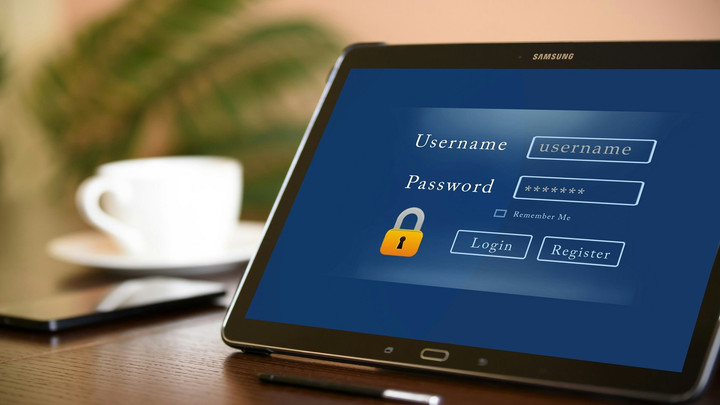
Username-Password Scheme
These shortcomings show the necessity for reform, which the introduction of Web3 and the underlying technologies can now help to accomplish. This possible change in how identities are managed online should have a beneficial impact on users and offer businesses the chance to develop and enhance customer experience.
We will go deeper into Web3's complexities and attempt to respond to the question, "What is a digital identity?"
The Beginning of New Era – Web3
The qualities of Web3 are decentralization, transparency, sovereignty, safety, and data management. However, a key principle is that each person needs their own Web3 identity in order to properly access decentralization benefits and many other characteristics of Web3 technology.
Users would find it difficult to verify their identities without a digital identity, which would be troublesome in the existing Web3 environment. As a result, digital identities are crucial to the development of the internet's next phase. Ironically, relative to more well-known concepts like DeFi, DAOs, NFTs, etc., the idea of a digital identity for all users has been disregarded. However, the ecology of the decentralized web requires a dynamic, shareable, and durable identification layer. What precisely is a Web3 identity, then?
With a Web3 identification, users have full control over how to handle their individual information. To precisely access information and data pertaining to a certain person, a Web3 identification is frequently needed. The information in this set comprises specifics that support use cases including data encryption, transfer, sign-in procedures, etc. This material is protected using cryptographic evidence, such as a digital signature.
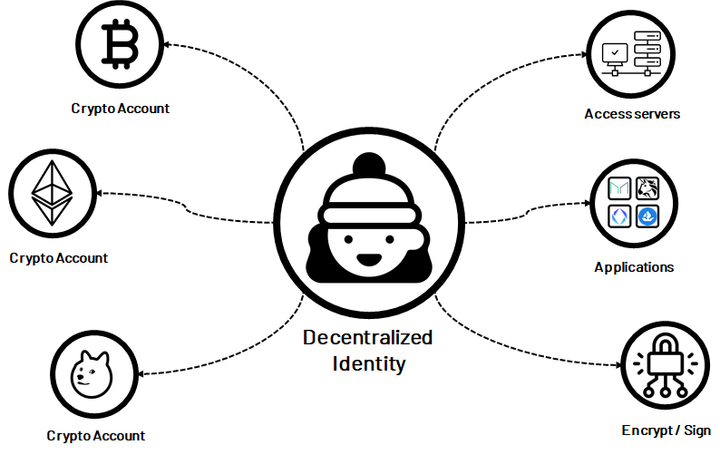
Decentralized/Digital Identity
To sum it up, a Web3 identity essentially gives people more access to private data and information by acting as a secure and private digital identity. This shares some similarities with the conventional identities covered in Web2 or even Web1. However, governance and compatibility are where the main differences lie.
This shows that mobility is a top goal in a digital identity, which is centered upon a consumer-centric ownership paradigm. The identity layer makes it possible for transmitted data to be transferred. In contrast to the typical Web2 platform, this framework utilizes a preemptive tailored mobility approach.
Additionally, SSIs, or self-sovereign identities, are a widely used notion frequently connected to Web3 identities. So, what exactly are SSIs?
What are Self-Sovereign Identities?
Self-sovereign identities place the consumer at the center of information warfare. In the end, this is in keeping with the fundamental principles of Web3, as SSIs remove the necessity to maintain private information in centralized databases and servers. People have more influence over the data they provide, which increases security. Individuals can safely share actual information that has been electronically authenticated using this user-centric approach.
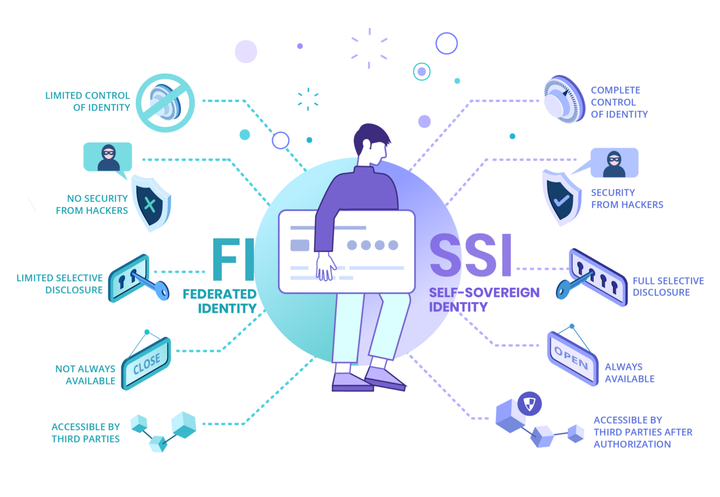
Source: Affinidi
An environment where all people have their own Web3 identity can be very advantageous for businesses. First of all, since users may use the same passwords across many platforms, it can greatly enhance the UX (user experience). It thereby eliminates the requirement for several login credentials for various websites.
Additionally, it will remove the obstacles encountered during onboarding. Users will therefore be able to access services with just a click and without having to register or do anything else. This means that customers will have easier access to company services. In addition to perhaps boosting sales, it will also help create a more seamless user experience.
We can look more closely at how to deploy identity management for these virtual identities now that we have a better knowledge of what a Web3 identity and SSIs are, as well as why they are significant for the Web3 ecosystem. Let’s see the use cases of digital identity:
Applications of Digital Identity
There are many applications for Web3 IDs, and anything involving decentralization warmly embraces Web3 identities. Examples include P2P transactions, NFTs, online games, and the virtual world. In light of this, an open standard and the compatibility of digital identity will be crucial to the ongoing support of a cross-chain environment.
We will investigate some possible applications to properly comprehend Web3 identities and their functions inside the Web3 environment. NFTs are where we're going to start!
NFT Space:
Digital identity can help the NFT industry to demonstrate who produced, controlled, and currently holds an NFT throughout its full existence. Additionally, Web3 IDs can be useful in the development of NFT-gated websites. To access gated material on these websites, users must authenticate and possess at least one token from a certain NFT collection.
Metaverse:
A verified and universal identity will be necessary for the virtual world and the whole customer experience, whether it is in the gaming sector or elsewhere. This will be relevant in several stages, including when establishing profile pages and during metaverse money transfers such as the creation, purchase, and movement of avatars and other assets.
Conclusion
Online identity has always been mainly the duty of the companies behind the websites and services. On deeper examination, however, we identified the shortcomings of the present centralized architecture based on usernames and passwords. This antiquated methodology does not make much sense in light of the current Web3 paradigm. As a result, the industry has changed and produced the digital identity, which is the best.
Discover more from CoinageReport
Subscribe to get the latest posts sent to your email.
This article is for informational purposes only and is not financial advice.


