
Exploring the Different Types of Cryptocurrency Wallets
Explore the different types of cryptocurrency wallets - hot, cold, desktop, mobile, hardware, and paper - and find the right one for your needs.


Cryptocurrency has forced a rethink of what money even is, drawing in governments, investors, and everyday users alike as Bitcoin’s rise pulled the whole asset class into the mainstream. Once you own some, the next question is usually the same one: where do you actually keep it safe?
Commonly, cryptocurrency would certainly go into a cryptocurrency wallet. As a result, there has been a surge in interest in learning about different types of crypto wallets in recent years. People are concerned about the ramifications of their choice of crypto wallets, which is one of the most important decisions they must make before investing in cryptocurrency. The following discussion provides a full overview of the various types of crypto wallets you can use according to
your needs.
Why Should You Be Concerned About Choosing a Crypto Wallet?
Why should you learn about the different types of crypto wallets? One of the most recent password thefts exposed about 8.4 billion passwords. The breach contained both old passwords and many current credentials for email and bank accounts. So while considering bitcoin and the money involved, it is critical to consider security.
How will you keep your cryptocurrency? What is the best way to use cryptocurrency to minimize loss? Could you benefit from security when holding your crypto assets? The answers to all of these questions depend largely on the various types of crypto wallets. As a result, you must thoroughly understand crypto wallets to select the best option for your needs.
What exactly are Crypto Wallets?
To begin with, cryptocurrency ownership differs from regular currency ownership. Cryptocurrency does not exist in physical form and is instead a collection of codes. Cryptocurrency is held on the blockchain with a unique address. Users can use their public keys to help other users distribute cryptocurrency assets. At the same time, a private key can be used to unlock the crypto assets in the wallet.
Consider a crypto wallet to be a regular wallet that is required to keep your assets safe. Different crypto wallet types provide better security protections than regular wallets, since crypto wallets never store actual cash. On the contrary, they ensure the safekeeping of crypto assets' keys. The information for connecting individuals to funds may be stored in a crypto wallet to secure its safety.
Crypto Wallet Types
When you buy cryptocurrency from an exchange, you can of course keep it where you bought it. If you buy tiny sums of bitcoin, it will appear in your accounts at first, much like a bank account balance.
When you buy cryptocurrency, you are automatically given one of the basic crypto wallet categories. Most importantly, the wallets on the exchanges will provide additional layers of security.
For example, crypto exchanges have insurance coverage in place to protect them against losses. Furthermore, monies are typically held in FDIC-insured accounts. However, these security precautions are not always sufficient for cryptocurrency storage safety. This is where you would need to locate the appropriate types of crypto wallets that can provide security. Let's take a look at the most frequent forms of wallets for crypto assets.
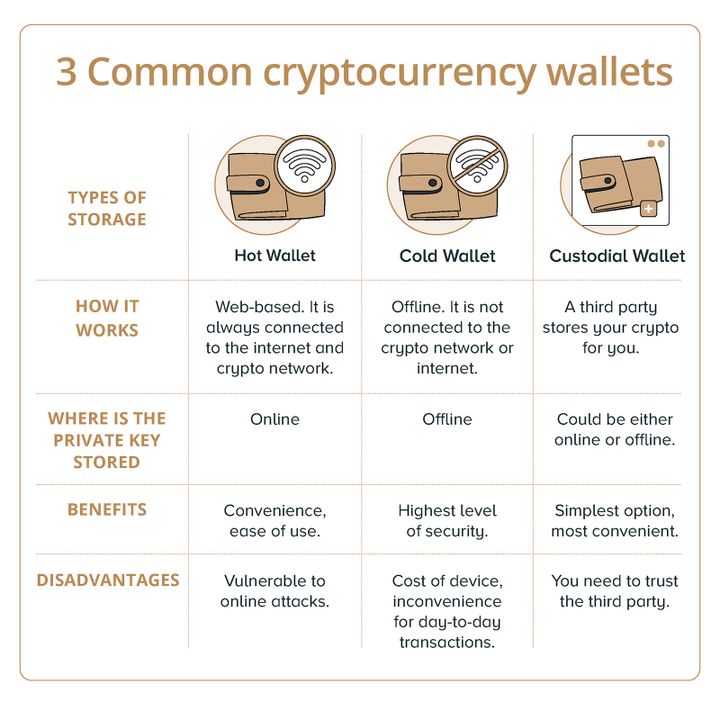
• Hot Wallets
Hot wallets are one of the most common forms of crypto wallets. Hot wallets are wallets that connect to the internet and often provide less protection. Because they are connected to the internet, hot wallets enable better accessibility. Hot wallets are extremely user-friendly but are vulnerable to fraudsters and hacker attacks.
• Cold Wallets
Cold wallets are essentially crypto wallets built for cold storage. Cold storage refers to the offline storing of users' crypto tokens. Cold wallets function as vaults. Some types of cold wallets can connect to the internet while still performing their essential functions.
Persons with bigger amounts of crypto assets would profit more from cold wallets. However, a combination of cold and hot wallets may provide more value for crypto users. For example, a major portion of assets could be securely housed in a cold wallet, while the hot wallet provides greater flexibility for funds. A hybrid method combining the two crypto wallet categories could provide greater security as well as flexibility.
• Custodial Wallet
A custodial crypto wallet is a type of wallet in which the user does not have direct control over the private keys. Instead, the private keys are held by the wallet provider. This provides a level of security for the user, as the provider is responsible for safeguarding the keys. However, it also means that users are reliant on the provider to access their funds.
Since the custodial wallets are centralized, CEX have more control over users’ funds.
Hot Wallet Types
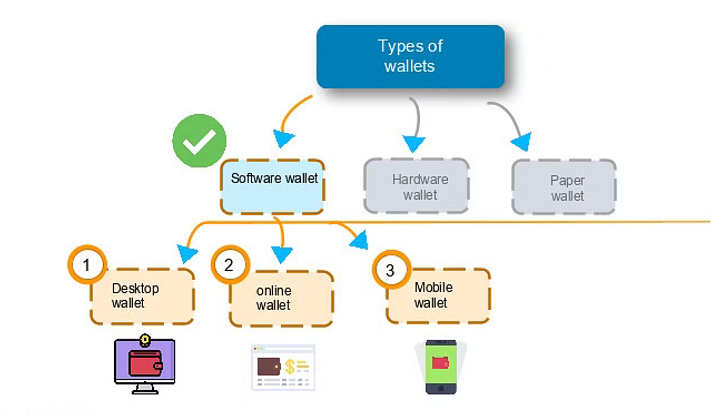
All software wallets are included in the top crypto wallet types in
general. Mobile wallets, web wallets, and desktop wallets are the most frequent
types of hot wallets.
1. Desktop Wallets
Desktop wallets require you to download an application to your desktop or laptop. The application will assist in the construction of a data file including the keys of the users. Users must additionally generate a password to access the keys. Desktop wallets provide you with custody of your key, but there is a risk of physical damage or malware/virus infection.
2. Web Wallets
Web wallets are a common type of hot wallet cryptocurrency wallet. Web wallets can be accessed using a web browser without the need for any specific software or applications to be downloaded. Web wallets allow you to access crypto assets from any location by using your password, a device, and a web browser. In the case of online wallets, the website would control the keys to your crypto assets. Alternatives, like as multi-sig wallets, provide customers some control over their cryptocurrency wallets.
3. Mobile Wallets
Mobile wallets, which have features comparable to desktop wallets, are another prominent crypto wallet type among hot wallets. You must install a mobile application that will serve as a hot wallet on your phone. Mobile wallets provide greater freedom for trading funds, but they also pose some security dangers.
Cold Wallet Types
There are two types of cold wallets: paper wallets and hardware wallets.
1. Paper Wallets
The name says it all: paper wallets are actual bits of paper. The paper must have all of the information required to gain access to cryptography. Cold wallets typically provide additional security.
However, this is not true in the case of paper wallets. You risk losing the crypto assets in your wallet if you misplace the paper document. Furthermore, paper wallets have the problem of being unable to readily disperse partial amounts of money. The time-consuming nature of paper wallet transactions creates major barriers to their use.
2. Hardware Wallets
Hardware wallets offer protection by preventing private keys from being revealed online. Hardware wallets, which work in the same way as flash drives, save private keys on a physical device for offline use. Because they can be easily attached to PCs or any other device through a USB drive, hardware wallets are one of the most user-friendly crypto wallet types in cold wallets.
Even when the gadget is connected to the internet, the private key does not leave the device. The device would
request transaction information and validate the data before completing the
transaction.
Conclusion
The type of cryptocurrency wallet you choose will depend on your individual needs and preferences. Hot wallets are best for small and frequent transactions; cold wallets are best for long-term storage of large amounts of cryptocurrency.
Desktop and mobile wallets strike a good balance of convenience for everyday amounts, but if you’re holding anything substantial, hardware and paper wallets remain the gold standard for keeping it out of reach of hackers.
Discover more from CoinageReport
Subscribe to get the latest posts sent to your email.
This article is for informational purposes only and is not financial advice.


