
How to Submit NFT Drop in 8 Simple Steps
If you have your NFT collection ready to launch and now you are looking for a perfect launchpad to Submit NFT Drop to, you can do this in 8 simple steps.


This is the era of Non-Fungible Tokens aka NFTs. From the
virtual world metaverse to the tokenization of real-world assets, NFTs have
become a reality, a buzz, and a trend with potential future growth. Thanks to blockchain
technology, the creators, investors, and collectors all can make money and
incentivize themselves by minting the right NFTs or buying them from the
secondary NFT marketplaces.
Creating NFTs and launching the NFT collection is a process
of continuous struggle that requires making multiple decisions like what blockchain
to choose, what should be the utilities, and what should be the project road map.
However, the important question is where to submit the NFT drop so the
community can mint it. This only decision can decide the hype and demand, a
strong concept, design, and community power behind a project.
What is an NFT Drop after all?
In literal meaning, NFT drop means to allow people to mint a
limited collection of digital items for a set time period. This is followed by
many steps. First, the projects have to brainstorm the idea of the NFT
collection and design the art. Then they create the value of the digital items
and convey it to their community. Then comes the community building. Once a
project has enough community, they allow them to mint the NFTs from a launchpad
and the process is called NFT drop.
Not all NFT drops are successful. If a project doesn't justify its value or has
enough scarcity, less number of people mint their NFTs and thus they earn very
little profits.
Choosing the Right Blockchain and NFT Marketplace:
There are dozens of NFT blockchains and the same number of
marketplaces to submit the NFT drop. Their selection varies from project to
project and depends on various factors. For example, for a project that
frequently requires minting and trading NFTs, Ethereum Chain cannot be the
first choice due to its high fees. Likewise, a very good project with an entire
ecosystem and potential future growth won't choose a less-known blockchain.
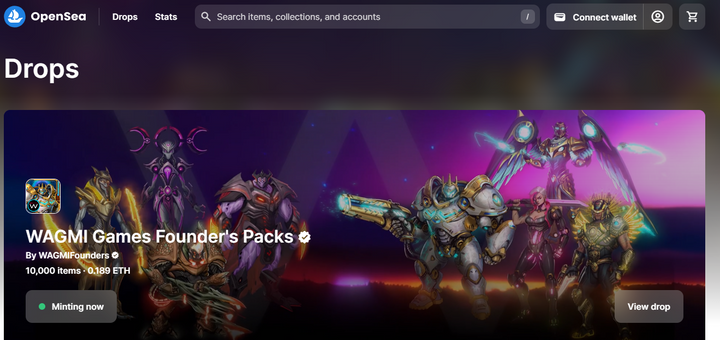
NFT Marketplace to submit collection
StartFragment
Choosing the right Blockchain:
The following factors play a key role in choosing the
right blockchain for any NFT project:
- Security:
The project should focus on a blockchain that is secure and resistant to
attacks, hacks, or fraud. - Scalability
& transaction costs: The blockchain can handle a high volume of
transactions without compromising speed or performance. - Interoperability
& compatibility: The blockchain that can interact with other
blockchains or platforms, so you can access a wider market and audience
for your NFTs and support other contract types such as ERC-721, ERC-1155,
IPFS, OpenSea, etc. - Ecosystem
& community: You want a blockchain that has an active ecosystem
and community
After you have decided on the right blockchain and NFT
marketplace, now is the time to submit your NFT drop so your community can mint
it.
How to Submit NFT Drop?
If you have created an NFT collection or want your top-notch
artwork to be an NFT, how do you submit your NFT drop to the world? Well, here
are the 8 simple steps that you can follow to submit your NFT drop to a
marketplace:
Step 1: Choose your NFT platform
Choosing the right NFT marketplace to submit NFT drops is
critical for the primary mints and for the secondary sales of the NFTs:
- The type of NFTs you want to buy or sell:
Different marketplaces may specialize in different categories of NFTs, such as
art, music, gaming, sports, etc. For example, if you are interested in digital
art, you may want to check out SuperRare or KnownOrigin,
which are platforms for curated and original artwork. If you are into gaming,
you may want to explore Axie Marketplace or Decentraland, which are platforms for virtual worlds and
collectibles. - The fees and the royalties: Different
marketplaces may charge different fees for listing, buying, or selling NFTs.
You should choose a marketplace that has reasonable and transparent fees that
suit your budget. - Reputation and security: Different
marketplaces may have different levels of reputation and security in the NFT
space. - The blockchain network and the payment options: Different marketplaces may operate on different blockchain
networks, such as Ethereum, Solana, Binance Smart Chain, etc. For example, if
you use Ethereum and want to pay with Ether (ETH), you may want to use OpenSea or Rarible NFT marketplaces.
Step 2: Define your NFT concept
NFT is one of the most crowded spaces where there are
hundreds in each domain. Be it music, art, utility, or other tokenization
forms, NFTs crowd every marketplace. Adding a similar collection with no clear
vision or value creation is just like being part of that crowd.
Therefore, the idea brainstorming for the NFT collection is
one of the most crucial steps in defining the success of your project. Define
your category, outlook, tags, and what benefits you promise or deliver through
this NFT Collection.
Step 3: Create your NFT artwork
Once you are clear with what you want and how you want your
NFTs to display now is part of creating the art for your NFTs. If your NFTs
are tokenization of real-world assets or music, you might want to create cards
that display the physical assets or music that you want to publish as an NFT.
For the art and other visually appealing digital assets,
choose the appropriate tool to create your NFTs. Photoshop, Adobe Illustrator, and
Blender can be your top choice. However, the current wave of AI has made it
extremely easy to create NFTs from a single line of natural language text. You
can use MidJourney or DALL-E2 AI tools to create your NFT collection.
Step 4: Mint your NFTs:
This is the part where you actually submit NFT Drop to the platform.
Now that you have your digital files ready, let’s learn how you can turn them
into NFTs.

Minting NFT Drop on Opensea
First of all, go to the NFT marketplace, for this instance,
we are going to use Opensea. Connect your Wallet with enough funds to pay the
transaction fees.
Now hover over the profile option and click Create.
From this page, upload your assets. You can only import a file size less than 100 MBs. Also, the allowed file types are mentioned on the page. Input the project metadata
like Name, description, properties, and traits. In the last step, choose the
blockchain that suits best you, your project, and your targeted audience.
Once you have filled out everything, click Create and the
NFT drop will be submitted to the NFT marketplace.
Step 5: Promote your NFT drop
Now is the time to spread the word about your project. The
more you market your project the bigger community you can build around your
project. You can use social media platforms like Twitter and Discord to expand
your community.
Step 6: Launch your NFT drop
If you think you have created enough hype about your project
and gathered enough people around you, you can move to the NFT launch of drop. Usually
only 1 to 5% of the total community mints NFTs in the public mint. So, for a
collection of 5,000 NFTs to be completely sold, you must have a community of
more than 50,000 people.
Most of the projects offer whitelists in exchange for
interactions on social media platforms. These whitelist wallet addresses can
mint NFTs at discounted prices.
Step 7: Manage your NFT collection
After you have submitted your NFT drop and the NFTs are
minted, you have taken most of your profits. However, this is the phase that
decides the fate of your NFT collection. If the price of minted NFTs increases
after the mint, the project is considered successful because the NFT holders
are profitable and they can trade those NFTs on the secondary NFT marketplace
and earn profit. However, if the floor price of the collection drops below the
mint price, the NFT holders are at a loss.
Generally, NFT projects with future goals and a clear road
map have higher chances of price appreciation. Set your goals, create an ecosystem,
and convey the updates to your community to keep the hype on.
Step 8: Manage Sales and Transactions:
The last and final step is to keep track of sales,
transactions, and any royalties. You can explore the tools available on the
launchpad where you submit your drop.
Submit your Drop to NFT Drop Calendars
The tools the NFT Drop Calendars have monthly visitors in
thousands. If you can list your project on the top NFT Drops Calendar, you can
win free exposure for your project. These platforms are purely NFT-oriented
visitors hunting for projects with potential growth.
NFT Drop Calendars have resources for the NFT community that
can help the users with upcoming NFT releases, airdrops, mint dates, and upcoming
events. Moreover, you can also feature your NFT collection for additional
exposure to your NFT project.
Discover more from CoinageReport
Subscribe to get the latest posts sent to your email.
This article is for informational purposes only and is not financial advice.


