
On Chain Developer Activity: In depth Analysis
Conducting an analysis of on-chain data can help monitor market trends and provide valuable insights.


On-chain data has become one of the sharpest tools available to crypto investors — a way to see what’s actually happening on a network rather than relying on price action alone. Developer activity, in particular, is one of the more underrated metrics: it offers an early read on which projects are still being built and which have quietly gone dormant.
This article aims to provide a comprehensive understanding of this important aspect of Blockchain technology. By the end of this article, you will have a clear grasp of this important topic in the Blockchain space.
Before diving into the world of on-chain data, let's briefly review what blockchain is.
What exactly is a blockchain?
The credit for the breakthrough of blockchain technology in popular culture is usually given to Satoshi Nakamoto for inventing Bitcoin. However, the original concept of a cryptographically secured chain was proposed by Stuart Haber and W. Scott Stornetta in 1991. They suggested developing a timestamp-based digital tool to make important documents on the web permanent and unalterable. The "proof protocol" would validate that a document existed at a certain time in its specific form.
Many of the original characteristics of blockchain are present in today's most widely used protocols. Simply put, a public blockchain is a digital chain made up of blocks that store valuable information and a unique hash code. Each block is identified by its own unique hash and the hash of the previous block, making it extremely difficult to hack once the blockchain reaches a certain length. A blockchain is a digital public ledger consisting of records distributed across a large network of nodes, where no single node, person, or organization has the power to make unilateral changes or control the flow of information.
Blockchain technology has the potential to enable a move away from centralized financial and information systems towards decentralized public networks that allow for a "trustless" transfer of value and information.
What basically is "On-chain data"?
On-chain data refers to all information about transactions that have taken place on a specific blockchain network. In the case of a public blockchain, this information is publicly accessible. The data has three different types.
• Transaction data (e.g. sender and recipient addresses, transferred amount, remaining balance for an address).
• Block data (e.g. time stamps, rewards, miner fees).
• Smart contract code (i.e. the business logic encoded on a blockchain).
Off-chain data vs. On-chain
To gain a deeper understanding of on-chain data, let's compare it to off-chain data. Off-chain data refers to transactions that take place outside the blockchain network and are not recorded on it. Instead of being recorded on the blockchain, off-chain data exists in conventional databases and servers.
Blockchains are decentralized, meaning they are not controlled by a central authority, reducing the risk of a third-party breach of consensus. On the other hand, off-chain data is managed by a third party, making transactions more private as the data is not publicly visible. However, since an intermediary handles the transactions, the recorded information can be changed, making the network vulnerable to attacks or fraudulent transactions.
Anyone can trace an on-chain transaction back to the original wallet address and see its transaction history, improving transparency and security. On the other hand, off-chain data lacks transparency and security, as all data is kept private, making it impossible to view transaction details.
Off-chain data offers fast transaction speed, while on-chain data is slow. Once a large amount of data is stored on a blockchain, it becomes congested and slow, making it more expensive. In contrast, off-chain data is validated quickly, regardless of the volume of data being recorded. Also, off-chain data does not need to go through various blockchain nodes to be validated, making storage even faster and less expensive.
What is On-chain analysis?
Combining indicators with technical and fundamental analysis, on-chain analysis enhances trading strategies by utilizing market research and price analysis, similar to fundamental and technical analysis.
On-chain analysis is the study of cryptocurrency by examining details like transaction history, hashrates, market sentiment, ownership, and large player activities. It helps identify hype and quality projects.
Top 8 on-chain analysis tools
Following are the top 8 on-chain analysis tools:
1. IntoTheBlock
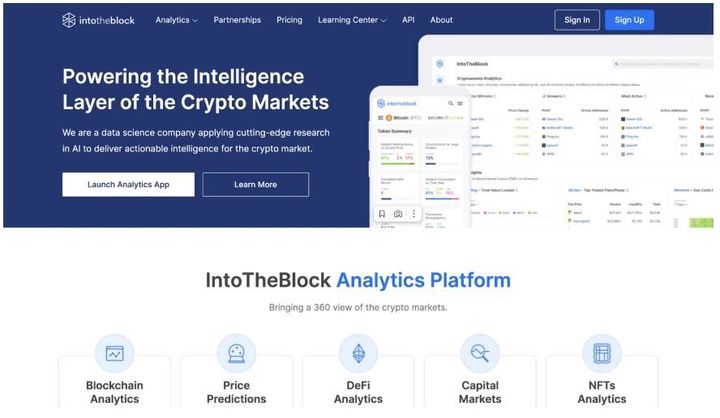
IntoTheBlock is not just a platform for analyzing blockchain data — it is a leading technology company in the field of data science that utilizes the latest AI advancements to deliver valuable insights to the cryptocurrency industry, making on-chain analysis accessible to both beginner and experienced traders. Additionally, all their services are offered at a competitive price.
Jesus Rodriguez established a Miami-based technology company in 2018, comprising data scientists, cryptocurrency specialists, and AI enthusiasts with a mission to unravel the mysteries of crypto assets and supply investors with valuable market information. The company, born from the founder's numerous unanswered questions about the cryptocurrency market, aims to utilize machine learning to uncover new insights into this intriguing asset class.
2. Glassnode
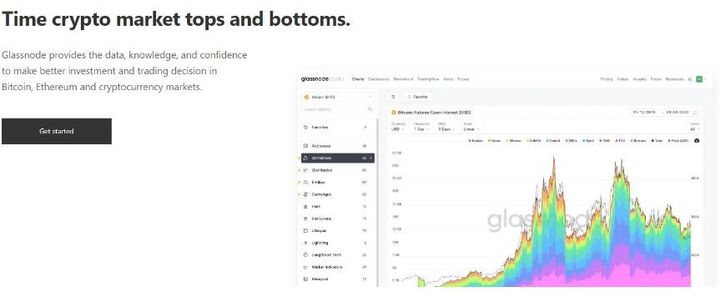
Glassnode is a platform that utilizes on-chain analysis to deliver cryptocurrency market insights. Established in 2018, it aims to aid crypto traders in their research by providing market intelligence and relevant on-chain data, improving their decision-making in the crypto trading world.
Glassnode has a reputation for its comprehensive reports of market indicators across multiple cryptocurrencies. The platform offers various applications that keep users updated on market movements. With live data, the platform offers access to charts and dashboards providing detailed information on address activity, balances, growth, supply, hodlers etc.
3. Nansen
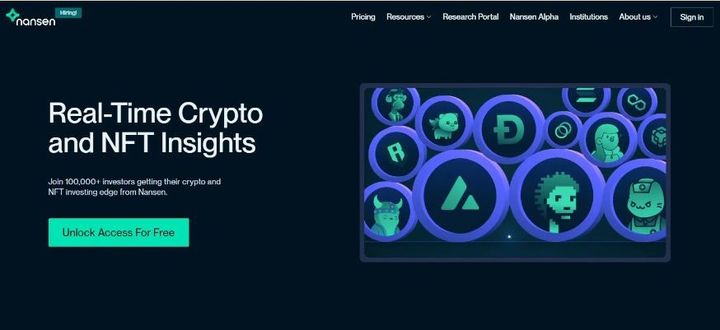
Nansen is a highly regarded blockchain analytics platform that integrates on-chain data with multiple wallet labels. With its real-time dashboards and alerts, users can gain a deeper understanding of the cryptocurrency market.
The platform is widely recognized for its use by crypto experts for in-depth on-chain research; it also serves as an educational tool for new cryptocurrency investors.
4. Dune
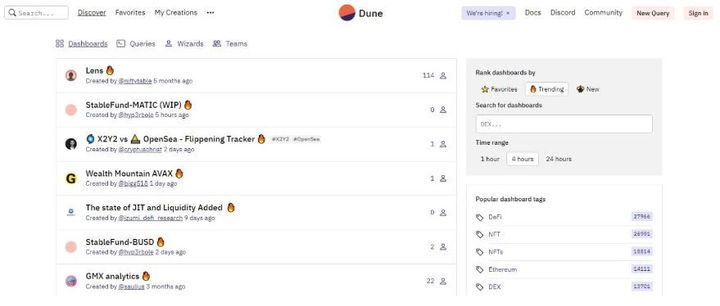
Dune is a crucial blockchain analytics tool that enables users to retrieve Ethereum data through simple SQL queries from pre-existing databases. Rather than writing a separate script, you can use query codes to access virtually any information stored on the blockchain.
Dune is widely recognized for its ability to provide insights into Ethereum blockchain research and its user-friendly approach to viewing on-chain data through query codes. With Dune, users have access to the necessary tools for querying, extracting, and presenting large amounts of blockchain data.
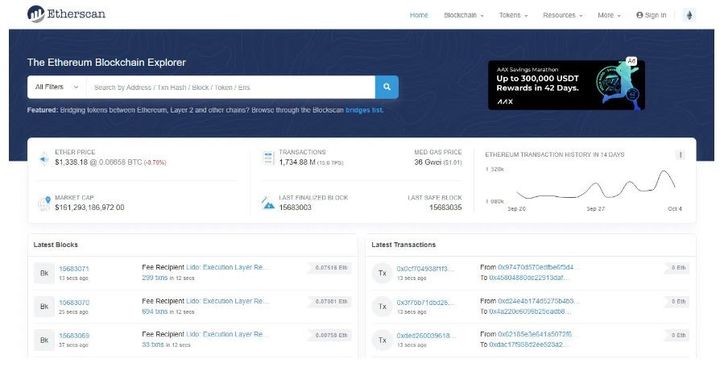
5. Etherscan
Etherscan, as the name implies, is a blockchain explorer and analytics platform for the Ethereum blockchain. It provides straightforward access to real-world data and transaction information, including pending and completed transactions.
Etherscan is widely recognized for its ability to track and analyze transaction activity on the Ethereum blockchain, making it easy for users to detect potential fraudulent activity.
6. Santiment
Santiment is a comprehensive market analytics tool that provides accurate data feeds, low-latency signals, tailored market watches, alerts, chart designs, and other features to enhance your trading experience.
Santiment is well-known for its newsletters, reviews, and market reports to its users. With various on-chain analysis tools, such as Sandbase, users have the ability to view and analyze charts for all types of coins.

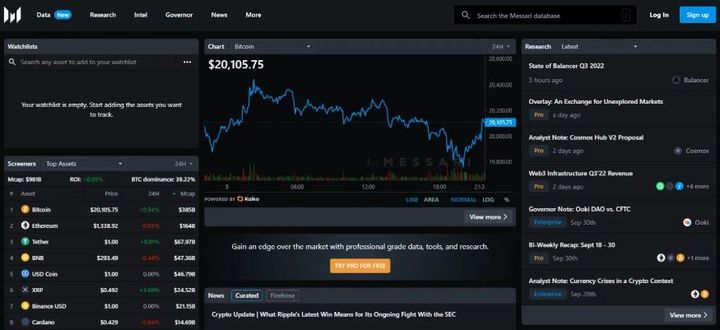
7. Messari
Messari is a great tool for exploring the cryptocurrency landscape, particularly by offering free charting services, extensive weekly reports, downloadable CSV data, and more. It is well-known for its daily insights into the major sectors of the cryptocurrency world, including DeFi, Metaverse, Web3, and NFTs.
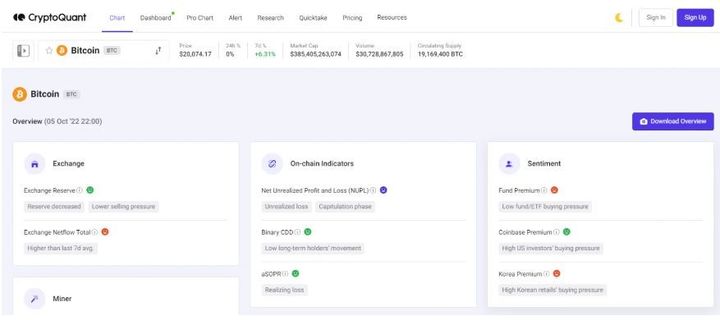
8. CryptoQuant
CryptoQuant offers market and on-chain data through its API or data analytics tool. It provides comprehensive data, including on-chain data and short and long-term indicators for popular cryptocurrencies such as Bitcoin, Ethereum, Stablecoins, and ERC20 tokens.
Conclusion
Tracking developer activity won’t tell you where a token’s price is headed tomorrow, but it will tell you which projects still have people showing up to build. That distinction matters more than most short-term price signals, especially when separating long-term winners from abandoned code.
Discover more from CoinageReport
Subscribe to get the latest posts sent to your email.
This article is for informational purposes only and is not financial advice.


