
What is a crypto dusting attack and how to avoid it?
In a crypto dusting attack, a small amount of crypto known as dust is sent to multiple crypto wallets with the intention of tracking or de-anonymizing crypto holders.


Blockchain technology is often deemed secure due to its decentralized nature, and the truth is that it is still facing various security challenges and issues. One commonly mentioned security issue, which remains somewhat mysterious, is the crypto dusting attack.
What Is Crypto Dust?
Crypto dust is the tiny or fractional amount of cryptocurrencies that are left behind after trading or making a transaction. This crypto is so small that you can't trade it or transfer it into another wallet. Crypto dust is usually harmless but when it is sent by hackers with malicious intentions, you could end up losing all your crypto assets.
What is the Dust Limit?
The dust limit is the minimum amount of cryptocurrencies you have in your wallet to make a transaction. If the amount of a cryptocurrency, such as Bitcoin, is just a satoshi in your wallet, you still have it in your wallet but you cannot use it to make a transaction or trade.
How is Crypto Dust Created?
Imagine you have 1 Bitcoin in your wallet. When you make a trade or transfer it into another wallet, 0.0001 BTC is left in your wallet after deducting the transaction fee. The remaining amount of crypto cannot be traded or transferred into another wallet. This fractional amount of BTC is called crypto dust. Crypto dust can also be considered a by-product of a transaction process.
Is Crypto Dust Dangerous?
Crypto dust itself is not inherently dangerous. It is nothing more than a leftover of a crypto transaction and is typically considered insignificant and harmless. However, when it is uninvitedly deposited into your crypto wallet, it has the potential to compromise the security of your wallet and pose risks.
Even if a dusting attack is successful, your private crypto keys are still safe and there is no loss of funds from your wallet.
How to Identify a Crypto Dusting Attack?
if you check your transaction history and see an unusual crypto transfer into your wallet by an unknown sender, it might very well be a dusting attack.
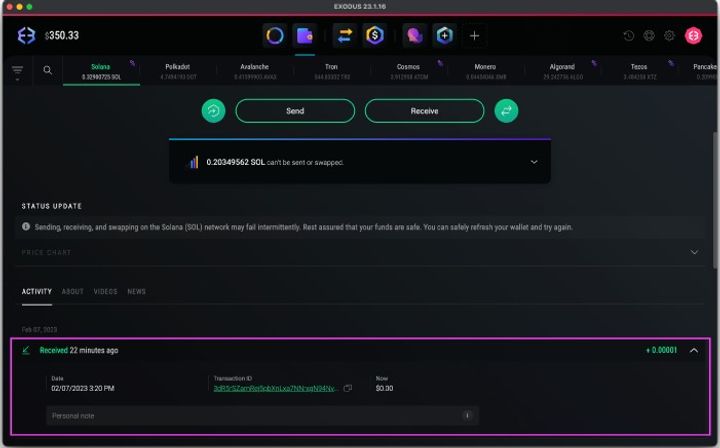
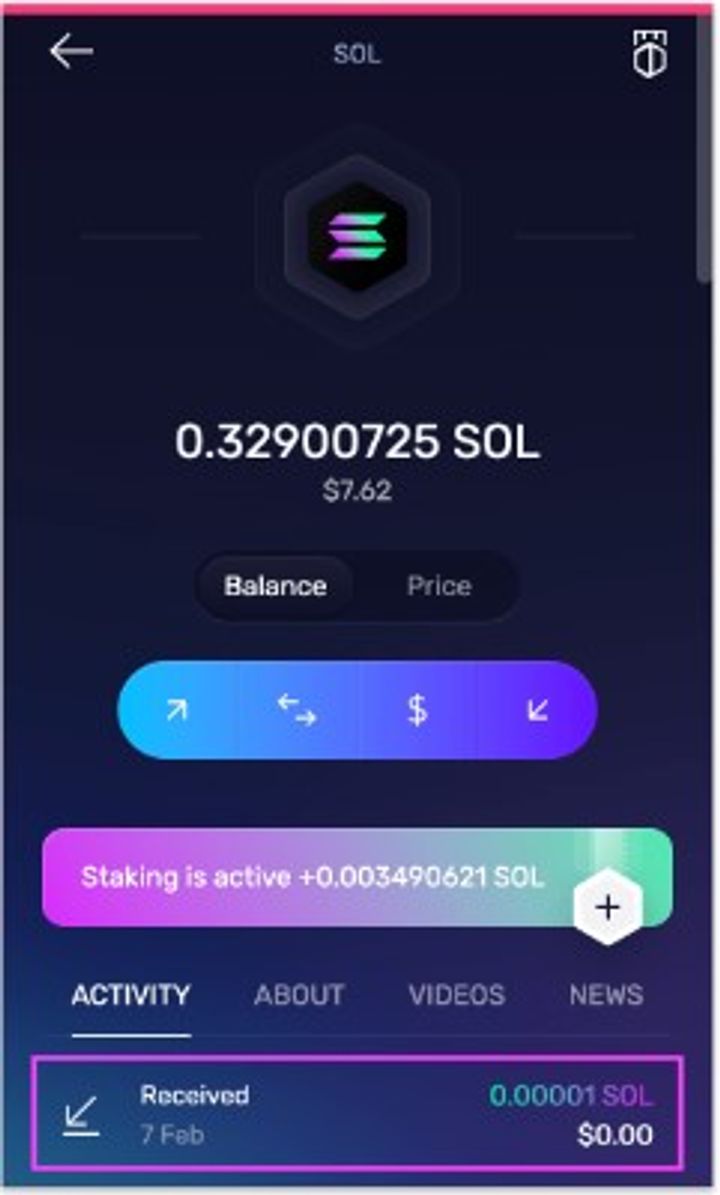
Here we look at how a dusting attack might look on different devices.
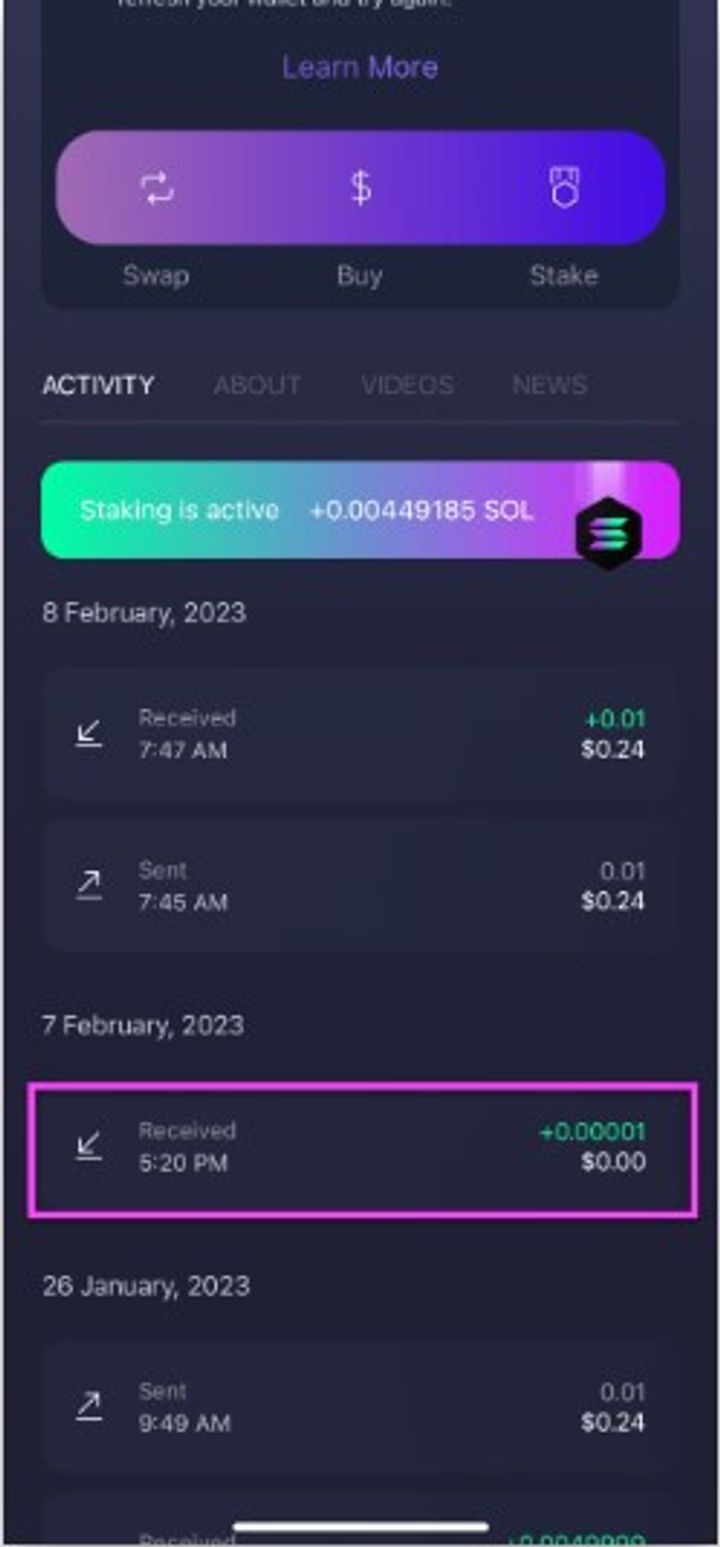
Mobile
On a mobile device, a dusting attack can be seen as a tiny amount of crypto received from an unknown wallet address.
Desktop
On the desktop, it may look like this.
Web3 Wallet
Similarly, in a web3 wallet, it might appear like this.
How Does a Dusting Attack Work?
Identifying a dusting attack becomes particularly challenging when you have a significant number of cryptocurrencies in your wallet, providing attackers with an opportunity to pilfer your crypto assets.
In order to carry out a successful dusting attack, hackers must have access to a large number of addresses linked with a single crypto wallet. To do so, they send a very small and usually unnoticeable amount of cryptocurrency to several crypto wallet addresses. When a user transfers this crypto dust to another address, it creates a pathway for hackers to de-anonymize and uncover the user's identity.

Subsequently, hackers may exploit this information to steal crypto assets using various techniques, including phishing emails, cyber extortion, private key theft, and other scams.
Litecoin Dusting Attack
In August 2021, Binance announced on Twitter that around 50 crypto wallets received a fractional amount (0.00000546) of Litecoin, which was later identified as part of a large-scale dusting attack. Although they announced that only 50 accounts were affected by this attack, Jan Happel, co-founder of blockchain data provider Glassnode, later revealed that the extent of this attack was much wider than it was previously believed, and about 300,000 LTC addresses were targeted in this attack. Interestingly, hackers later announced that the purpose of this attack was to advertise the service and not to steal funds or cause panic.
How to Counteract a Dusting Attack
To maintain the safety of your crypto assets, consider implementing these strategies to avoid a crypto dusting attack.
I. Understanding Crypto Dusting Attacks
First of all, learn what crypto dusting attacks are and they are executed.
II. Hierarchical Deterministic (HD) Wallet
Users can use a Hierarchical Deterministic (HD) wallet to carry out transactions as it creates a new address for every transaction, making it more challenging for hackers to uncover your identity.
III. Strengthening Wallet Security
Use reputable and trusted wallets to store your cryptocurrencies and enable two-factor authentication for added security.
IV. Monitoring and Identifying Crypto Dust
Keep track of your transaction history to identify any dusting attacks. Be cautious of crypto transactions involving very small amounts of cryptocurrency.
V. Refraining from Interacting with Crypto Dust
If you ever receive a small amount of crypto from an unknown sender, do not spread it by sending it to other wallet addresses as doing so might lead to phishing or other scams.
VI. Use a Virtual Private Network (VPN)
Always use a Virtual Private Network while making trades to keep yourself anonymous.
VII. Conversion to Exchange Tokens
Some exchanges offer the option for users to convert crypto dust into native tokens. This feature allows users to earn tokens in exchange for their crypto dust while also helping them eliminate the accumulation of unused fractional amounts.
Conclusion
As we have discussed, crypto dust is not harmful and is nothing more than a remnant of your crypto transactions. However, when it is sent by an unknown sender for malicious purposes, you should handle it carefully to ensure the safety of your crypto assets. As a precautionary measure, it is advisable to regularly monitor your crypto transactions and promptly address any instances of crypto dust. Implementing strong security practices and staying informed about potential threats can further enhance the protection of your valuable crypto assets.
Discover more from CoinageReport
Subscribe to get the latest posts sent to your email.
This article is for informational purposes only and is not financial advice.


