
Bitcoin Holders Are Facing Colossal Losses. What to Expect?
Long-term Bitcoin holders might have noticed a huge decline in the value of the asset. This decline in the asset is causing problems for the flagship currency investors, who aren’t getting profits.


The biggest crypto asset in the market has tanked below the $20k price level and hasn’t been able to surpass this mark for quite some time now. We look into the major development in the BTC ecosystem and discuss the problematic situation for Bitcoin holders.
Bitcoin Current Outlook
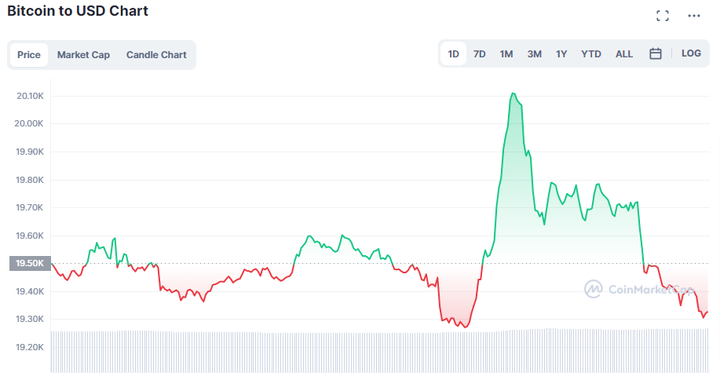
Data from CoinMarketCap shows that Bitcoin tanked below the $20k price mark on September 15. Despite a couple of attempts to cross the $20k price level, Bitcoin hasn’t been able to maintain its position above this level. Yesterday, the asset was able to cross the $20k price mark but selling pressure slapped it below the $19k price range again. With a daily trading volume of more than $43 billion, BTC is trading without any major change from its previous day.
The price of the asset has been confined within the $19k-$20k price range for almost a week now. Although BTC has added more than 7% to its daily trading volume, it is far from its all-time high.
CoinMarketCap
Bitcoin [BTC] traders may have observed a significant decrease in volatility. Not long ago, BTC would make large moves in which prices would rise by huge margins, making it highly profitable for long-term holders. Currently, being a long-term BTC holder is not as profitable.
Let’s look at the BTC ecosystem and try to analyze why Bitcoin holders are facing losses.
So, What's Happening?
A recent Glassnode report summarized BTC's deteriorating long-term holder profitability. According to the research, long-term holder profitability had fallen to levels last seen in December 2018. During the previous negative cycle, the market bottomed out around the same time. According to the long-term holder SOPR statistic, long-term holders were selling at a 42% average loss.

The evaluation corresponded with BTC's performance, particularly in the last three months. The coin has struggled to bounce back from its lows, and price levels exceeding $25,000 are now a distant memory. BTC's most recent performance also demonstrated a preference for price levels below $20,000.
Furthermore, the present range of BTC may explain why long-term holders are shifting away from a long-term plan. So far, the cryptocurrency has maintained a fair level of volatility in its current trading range.
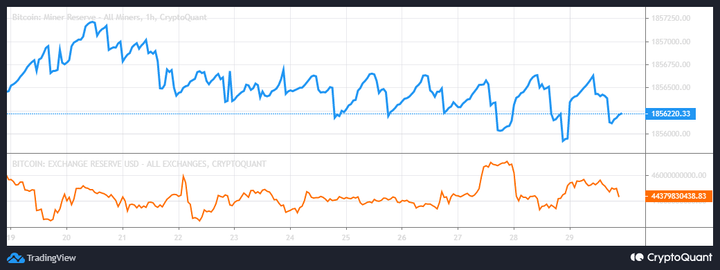
Long-term investors have been exiting assets in order to prevent missing out on short-term gains. The transition from long-term to short-term earnings has had an impact on Bitcoin miners. They used to wait for prices to rise so they could make bigger profits, but that is no longer the case. Miner reserves have been stuck in a cycle of short-term selloffs, particularly in recent weeks.
CryptoQuant
The strain on miner reserves has resulted in a decline overall, particularly in the last 10 days. An interesting interaction between miner reserves and exchange reserves was also noted. When mining reserves fell, exchange reserves climbed, establishing an inverse connection. This is because the market has interpreted miner reserve outflows as a signal to sell.
Let’s Look at the Bigger Picture
Recently, miner reserves have been considerably affected by the requirement for miners to fund mining expenditures. As a result, miners are forced to sell at times, regardless of whether BTC is rising or falling. Macro variables also affect BTC’s price action.
Inflationary pressures, for example, have a significant impact on investment decisions. Thus, market conditions in recent months have resulted in a move from risk-on to risk-off assets. Many investors have been compelled to exit BTC and other risky assets due to the impacts of inflation, and many have been holding the dollar instead. This explains why the dollar has been strengthening.
It may take months to bring inflation under control, limiting BTC's capacity to return to past highs. The positive aspect of this situation is that the reduction in long-term investor profitability to 2018 levels may indicate that the market is nearing the end of the current bearish cycle.
Discover more from CoinageReport
Subscribe to get the latest posts sent to your email.
This article is for informational purposes only and is not financial advice.


