
What’s the Role of Hash Rate in the Blockchain Ecosystem?
The decentralized network of the nodes in a blockchain secures transaction records in the crypto ecosystem. The hash rate in the blockchain ecosystem plays a critical role in the mining operations of blockchain networks.


In essence, the Bitcoin hash rate is a number related to cryptocurrencies that rely on the Proof of Work (PoW) consensus method.
What is Hash Rate in the Blockchain Ecosystem?
The hash rate is a measure of the amount of computational power a miner or group of miners uses to process transactions. The mining process is facilitated by the hash rate, the processing power needed to solve cryptographic puzzles.
One of the key elements in the realm of cryptocurrencies, especially Bitcoin, is the hash rate. The hash rate is more than just another number for cryptocurrency activities.
According to CoinWarz, the current hash rate of Bitcoin is 254.14 exahash per second (EH/s). There are several ways to measure the hash rate in the blockchain ecosystem. The hash rate of Bitcoin has been on a constant rise.

The current Hash rate of Bitcoin
How Does the Hash Rate Work in the Blockchain Space?
Hashing is a numeric code with a defined value that is used to describe information, words, and messages. Many virtual currency initiatives use random number generators or hashing algorithms to generate hash code.
Miners have to compete with one another to correctly estimate a code, the "nonce," before submitting a new payment to a block. The goal of the contest between the competitors is to create a hash that is less than the number connected with the "target" hash. It generates a new hash for each change to the nonce.
What role does computing power play in this situation? Since the hash value of each new hash is entirely random, it is very difficult to predict it. Therefore, before reaching the goal of inserting the relevant transaction into the blockchain, miners may need to complete many hashes. The miner obtains a block payout in the form of recently created coins after the hash is successfully verified.
Additionally, miners split the transaction cost for each transaction they add to the block. The confirmation for earlier transactions prevents any alterations to the prior blocks from being introduced after the addition of a new block.

Blockchain networks with Proof of Work provide miners a block incentive for mining each fresh block. Halving is a pre-programmed technique used by PoW blockchain systems to cut the overall supply of a coin over the length of its processing lifecycle.
In Bitcoin, for instance, every four years, the block incentives for mining are cut in half. Each cryptocurrency system has its own specific requirements for halving, including Dash and Litecoin. For every 210,240 blocks, Dash reduces block payouts by roughly 7.14 percent. For every 840,000 blocks, Litecoin adopts the Bitcoin halving strategy.
What is the Significance of the Hash Rate?
Why would you try to figure out a hashing power converter and devote effort to this endeavor? How can the hash rate be of use to you? You can get the answers by thinking about the tenable benefits demonstrated by the bitcoin hash rate. Here is a summary of the ways that hash rate functions as a key indicator of data about a blockchain network.
Blockchain Security
The estimated hashing power for a particular coin demonstrates the level of protection for the cryptocurrency's mining infrastructure. One of the fundamental consequences of the hash rate is how it is directly related to network security. A greater hash rate makes the network more secure because it takes more computing power to carry out a 51% assault. Now, several miners working simultaneously could provide the necessary power for such cyberattacks, but a bad actor acting alone is unable to successfully carry out a 51% attack.
To assess a cryptocurrency's security, many crypto specialists focus on learning "what is the hash rate." If you pay close attention, you'll notice that several cryptocurrencies have suffered from 51% attacks as a result of their poor hash rates. Due to the reduced hash rates, the attacks may be conducted even by a single miner.
On the other hand, a 51% attack would require a significant resource pool, as demonstrated by the enormous worldwide hash rate of Bitcoin. Therefore, experts can attest to Bitcoin's nearly impenetrable security system.
Mining Difficulty
The calculation of mining difficulty is a noteworthy feature for defining the importance of hash rate in the blockchain space. The input of the bitcoin hash rate helps determine the mining difficulty. Additionally, it aids in modifying the mining difficulty for a particular quantity of blocks following the time needed for locating or producing the blocks.
The typical interval between blocks in the case of Bitcoin is 10 minutes. It's interesting to note that the Bitcoin algorithm is set up to change the mining difficulty every 2016 blocks. The mining difficulty for Bitcoin often changes after a pause of two weeks.
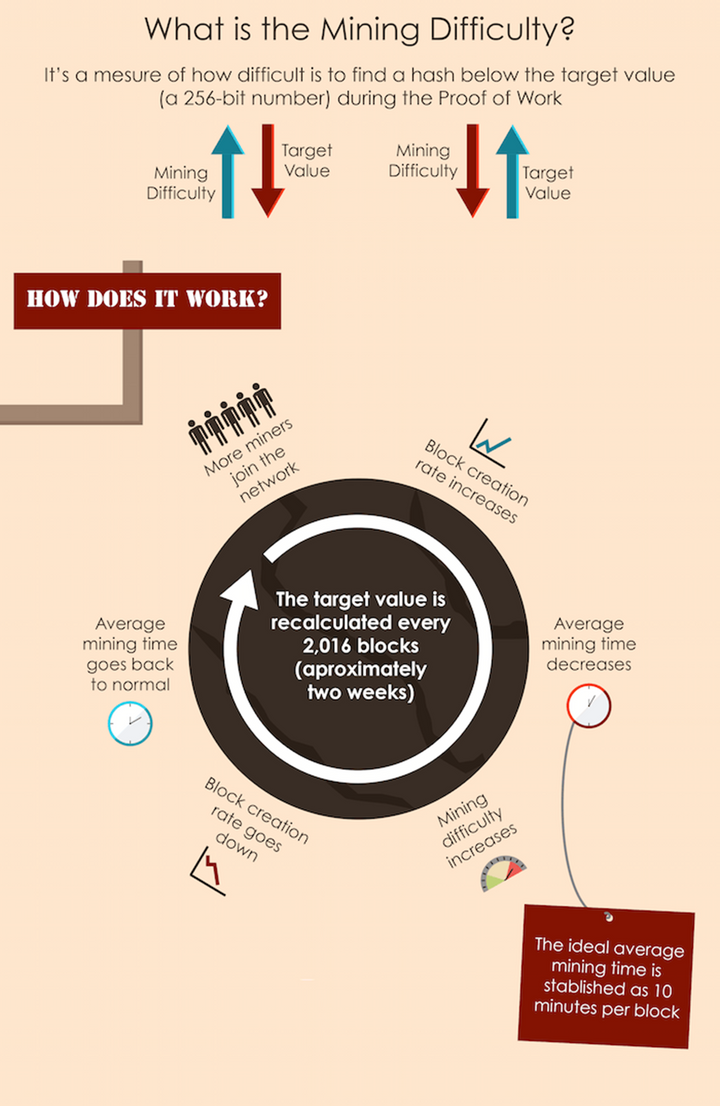
You can find algorithms in Bitcoin Foundation that aid in predicting the time needed to repeat work disparities between blocks. The hash rate and current mining difficulty are used by Bitcoin Core as inputs to manage the work disparities between blocks. Block validation duties are also carried out in conjunction with Bitcoin Core.
Implications of Changes in Hash Rate
In many situations, the precision of a hashing power calculator might be questioned. Various elements that can affect hash rate variations. The anticipated hash rate is based on the power, time consumption, and hardware needs of a particular cryptocurrency. The Bitcoin mining difficulty adjustment system is a prime illustration of how to interpret the effects of changes in hash rate.
A lower hash rate would suggest a smaller computational power demand, but increased dangers. Cryptocurrency exchanges may limit trade in a particular cryptocurrency or stop selling it if they notice a persistently declining hash rate.
An increase in hash rate might not seem advantageous to miners, particularly given the increased difficulty of mining. Higher hash rates make mining more expensive, but they may also increase network security positively and effectively. A network subject to 51% assaults would require more time and resources to corrupt if the hash rate was higher.
Bottom Line
The hash rate is one of the key ideas in cryptocurrencies and blockchain technology. When choosing a cryptocurrency network to mine blocks, miners must take into account the hash rate for that network. Numerous miners may join a particular cryptocurrency network due to the rewards connected with mining cryptocurrencies.
Discover more from CoinageReport
Subscribe to get the latest posts sent to your email.
This article is for informational purposes only and is not financial advice.


