
How stagflation could impact the crypto Market
Stagflation could have a negative impact on the crypto market, as it could lead to a decrease in demand for crypto assets.


Stagflation — the uncomfortable combination of rising prices and a stalling economy — is one of the more difficult macro backdrops for any asset class, and crypto is no exception.
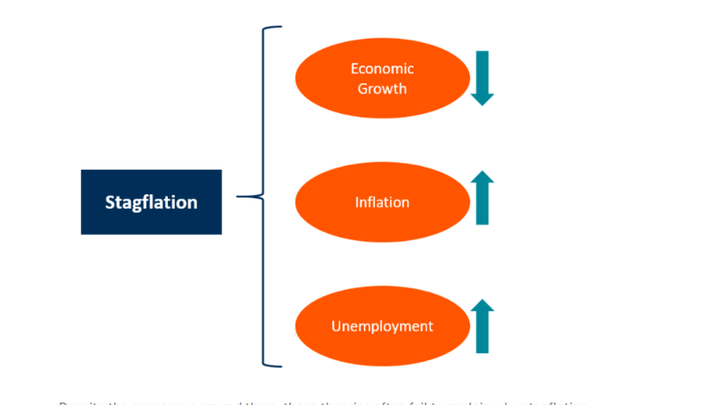
Stagflation is a period of low economic growth; higher rates of
inflation & unemployment are signals of a stagflation cycle.
Because of these elements' aggravating potential, economic policymakers find
this combination challenging to deal with.
The term Stagflation was
revived in the USA during the oil crisis in the 1970s which led to
the recession alongside five quarters consecutively of negative Gross domestic
product (GDP) growth. From 1973 through 1974, inflation reached double digits.
By May 1975, unemployment had touched 9%. A misery index was applied to
illustrate the effects of stagflation . The inflation and unemployment rates index
checked how stagflation affected the country's citizens.

Stagflation History:
In the 20th century, stagflation was precluded from the economic theories that predominated in academic & policy circles. Particularly, the macroeconomic policy was described as a trade-off between inflation and unemployment.
It is explained in the Phillips curve's economic theory, which appeared in the Keynesian economics context.
Economic experts are inclined toward the deflation risks that came out due to the Great Depression and the rise of Keynesian economics. They assert that almost all policies intended to lower inflation normally increase unemployment, whereas those intended to lower unemployment raise inflation. Even during sluggish or negative economic growth, inflation has been persistent. A regular boost has followed each declared recession in the US over the last 50 years in yearly consumer price levels.

Causes of Stagflation:
Stagflation can be created by a high cost of living that outruns consumers' production or demand levels. It can cause reduction in the GDP, which can happen when a government enforces security measures. Many other stagflation causes exist, such as monetary policy errors and supply shocks.
A supply shock is a phenomenon that causes a rise in prices without any adjustment in aggregate companies' inventory or demand. These shocks can be caused by human actions. For example, a dispute in different states may boost the oil prices or another input into the process of production, leading towards cost-pull inflation, i.e., inflation due to an increase in the costs as a result of rising wages & raw materials. Supply shocks also include a rise in prices because of natural disasters. Simply put, a conversion in the production process would reduce the supply of goods or services and will lead to demand-pull inflation, a certain inflation type caused by supply shortages.
Monetary policy errors relate to how central banks control their country's money supply. They make money available for lending due to lower interest rates. In this case, interest rates will decrease, causing inflationary pressures on consumers' prices and wages, although with very high-interest rates, a reduction in economic activity may also bring stagflation.
Stagflation and its effect on Crypto markets:
Historically stagflation has been bad for equities and stocks. The cryptocurrency markets have a strong association with stocks. Stagflation is the specific term used to explain an economy with significant inflation and high unemployment. While stagflation exists today, it is unclear whether an investment in cryptocurrencies is wise. Supply shortages and wars are causing a worldwide slump in almost every market. Cryptocurrencies have not come around for a very long time. Hence, more data is needed about whether crypto is a good investment during stagflation.
An investor can examine how conventional markets act during a recession or inflation and why. Inherently stagflation is not good for traditional markets. Crypto markets are highly related to general indexes. That means the negative sentiment can flow into cryptocurrencies, digital assets controlled with cryptographic algorithms. Normally, traditional traders may be more willing to hang on during economic uncertainty periods than cryptocurrency investors.
Because it is linked with higher volatility, there may be less cryptocurrency demand during the stagflation period than usual.
Stagflation may affect crypto markets, making retail investors less inclined to purchase digital assets. High inflation directly affects how much money investors have to buy a more risky cryptocurrency. Besides, depending on one's crypto investing strategy, one may invest in these assets over conventional financial instruments. Cryptocurrencies run on a blockchain platform and are not bound to any particular country's monetary policy, as fiat currencies are. When inflation rises in one country but not any other, traders would still realize gains by crypto investments, even if their home currency falls in value because of inflationary pressures.
Investors try to find ways to save their wealth from stagflation, specifically in countries like Argentine and Venezuela, where hyperinflation happens. Hyperinflation occurs in an economy when there is a speedy and unmanageable price increase of essential goods & services. Here crypto investments work well in the stagflation period as they offer an alternative payment method and guard against hyperinflation. Individuals may choose to run away from hyperinflation by re-directing some of their reserves into [crypto??].
Stagflation and BTC:
Additionally, some economists say that stagflation can cause the cryptocurrency markets to differentiate from equity markets. Particularly, cryptocurrency is a reasonable alternative if marginal gains further go down in the stock markets. Even after this possibility, the reality is that stagflation has a negative impact on the cryptocurrency markets, although, as Bitcoin curtail up on exchanges, the price may soon become volatile.
During times of Stagflation, investors try to hedge against economic downturns. Generally, this means investing in hard assets like gold & silver. Many experts predict that stagflation can be an enzyme for Bitcoin & cryptocurrency adoption. Certainly, Bitcoin has many similar properties to gold. Hence, investors may use Bitcoin to preserve their purchasing power.
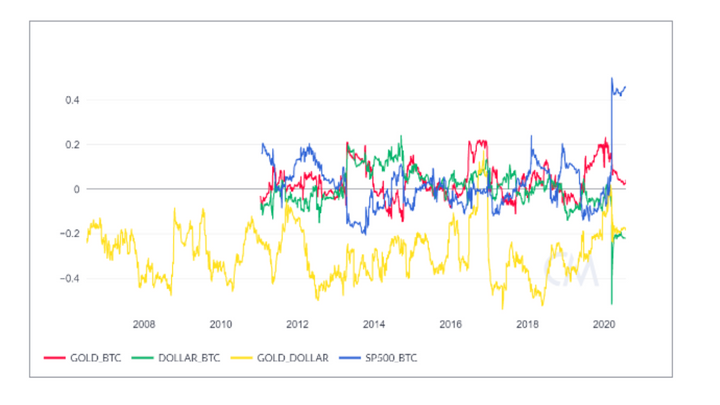
Furthermore, Bitcoin is a scarce instrument, as a maximum of 21 million can come into circulation. The number of Bitcoin that comes into circulation is halved almost every four years. Due to this finiteness and scarcity, Bitcoin is also known as digital gold. Bitcoin is similar to gold, which normally functions as a hedging instrument against inflation.
First, Bitcoin is a decentralized global way of payment beyond the central authority's control. Governments can exert zero control over it, which makes it almost immune to monetary policy & potential corruption.
Stagflation cannot be controlled and healed properly. According to some economists, productivity has to be boosted to a certain level, resulting in higher growth without affecting more inflation. As a result, it may be possible to tie up the monetary policy & control the inflationary stagflation component. The key to preventing stagflation is that economic policymakers need to be extremely proactive to do so.
This could cause a decrease in the value of crypto assets, as investors may not be willing to buy them in a stagnant economic environment. Additionally, a decrease in economic activity may lead to a reduction in liquidity in the crypto market, which could make it more difficult for investors to buy and sell crypto assets.
Conclusion:
Everyone looks like a genius in a bull market; stagflation is where actual risk management gets tested. Given how directly crypto now trades alongside broader macro sentiment, patience and capital preservation matter more than trying to call the bottom.
Discover more from CoinageReport
Subscribe to get the latest posts sent to your email.
This article is for informational purposes only and is not financial advice.


