
Will a possible India ban on crypto impact the market?
Recently the RBI (Reserve Bank of India) told the government of India to ban cryptocurrency as it is a financial threat to their economy. Can this possible Indian ban on crypto create FUD (Fear Uncertainty Doubt) and crash the market?


India and Crypto:
A survey of more than 2,500 daily internet users in India found that over 29% hold cryptocurrency — roughly double the 14.6% global adoption rate. That scale is exactly what makes the prospect of an Indian ban such a significant risk for the broader market.
Nonetheless, India constitutes the largest crypto community in the overall market. India has already imposed a 30% tax on cryptocurrency trades without any exemptions or deductions. Also, over 1% will be applicable as TDS and all the tax will be deducted at the time of the credit of the amount.
India Ban on Crypto:
The RBI wants a complete ban on all digital assets including cryptocurrency and seeks international collaboration if such a ban is put in effect. The bank stated in its annual report that only banks and governments are allowed to release tokens or currencies and no third party can be allowed to do so. The finance minister of India Nirmala Sitharaman told the parliament that cryptocurrencies and other digital assets are concerning for the economy of the country. Therefore, banning these assets must be a priority for the Indian government.

Finance Minister of India
Cryptocurrencies are borderless, trustless, and pair-to-pair assets that do not require a third party to send and receive the payments. Cryptocurrencies are decentralized in nature – means there is no single entity that can control them. Even in centralized crypto exchanges, it is hard to control assets and transactions. It becomes a really big problem if the users are using the Decentralized Exchanges DEXs. These DEXs don’t require a KYC to use these platforms, and there is no way to track the location of the users.
Acknowledging those realities, the finance minister of India told parliament that “Cryptocurrencies are by definition borderless and require international collaboration to prevent regulatory arbitrage. Therefore, any legislation for regulation or banning can be effective only after significant international collaboration on evaluation of the risks and benefits and evolution of common taxonomy and standards.”
Can the Crypto ban impact the market?
Cryptocurrency is very fragile and highly responsive to news. If there’s good news about it, Bitcoin pumps to the moon, and if there’s bad news the prices drop. When Tesla announced it would be accepting Bitcoin, Bitcoin rose from below $40,000 to $64,000; when news broke that Tesla was reversing its decision, the prices fell even further than previously.
China has a history of banning Bitcoin and cryptocurrency. On November 22, 2019, the FUD sent Bitcoin to a newer low. China had been doing this every now and then; it finally banned all cryptocurrency transactions and mining activities.
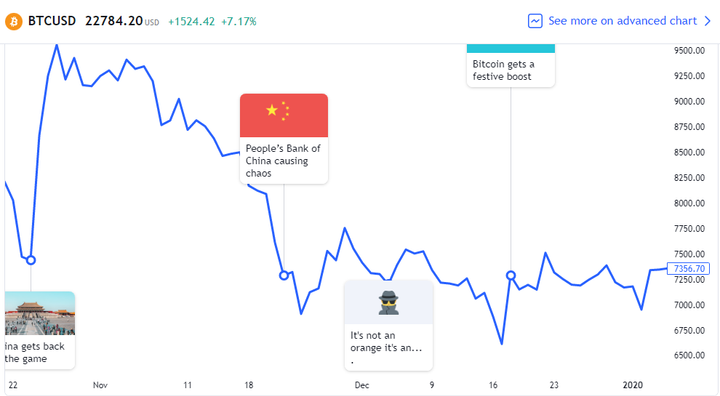
India has already aroused FUD (Fear Uncertainty Doubt) by imposing a huge tax on cryptocurrency trades. The tax was imposed in February 2022 but fortunately there was little response to it and Bitcoin did not show many drops.
If India indeed bans crypto, this move will send a shock wave through the entire cryptocurrency market, which will lose a huge crypto community. However, the magnitude and the time of the fear are still uncertain. If Bitcoin survived after losing China’s crypto-loving people, it can also stand losing another country like India.
Even if India follows through, history suggests the bearish reaction would likely be sharp but short-lived — Bitcoin has weathered exchange bans, country-level crackdowns, and worse, and has yet to be permanently derailed by any of them.
Discover more from CoinageReport
Subscribe to get the latest posts sent to your email.
This article is for informational purposes only and is not financial advice.


