
What Is A Blockchain API? Top Blockchain APIs for developers
Blockchain APIs are going to be the most effective tools for blockchain developers as we move to the next version of the internet, the web3.


API (Application Programming Interface) is an intermediary program
that helps two or more applications communicate to extract or share definite
data. We are connected to the world and one another like never before. With
just a few clicks, you can chat, post, and purchase from anywhere at any time.
So how does it happen? How does data get from here to there?
And how do our devices and apps communicate with each other to make our digital
lives possible? The answer is API.
What is an API?
API stands for application programming interface. Plainly put, it is the
system that exchanges information between applications. An API is a
messenger that takes requests about what you want to access from a server and
returns a response to you.
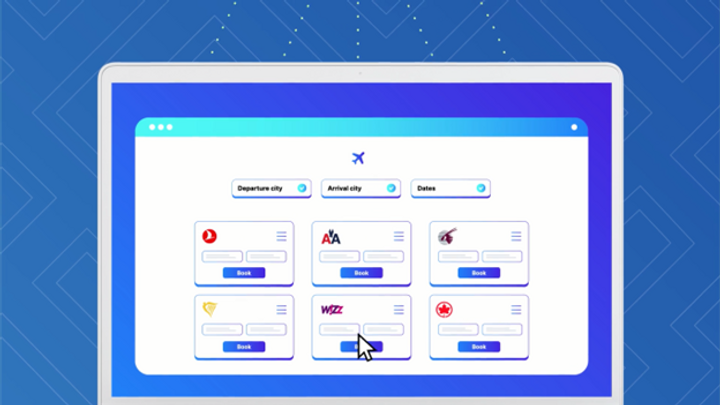
Here is an example: You use a third-party travel service
that has aggregated flight data from multiple airline websites. To book a trip,
you select the departure city and an arrival city, and a list of flights
is displayed. That's because the travel service interacts with each airline API
to see what's available. The API is the interface that is asked by the travel
service to get the flight information from each airline's database.
What are blockchain APIs?
APIs are what make connectivity possible
between all our devices and applications, and blockchain APIs work the same
way. A blockchain API enables communication between applications.
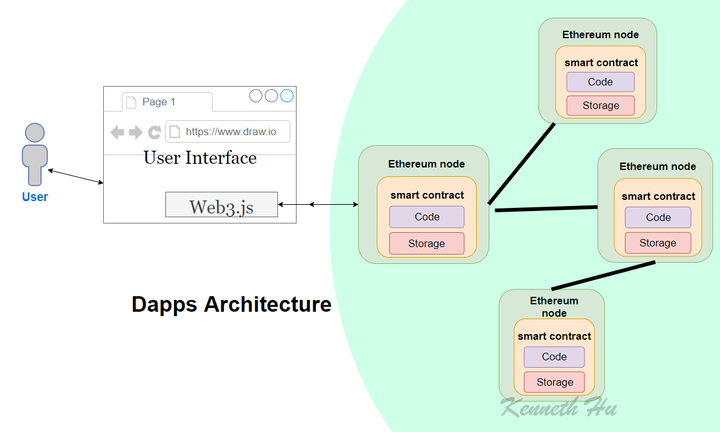
Every app that relies on smart contracts needs to access the shared state machine, either by maintaining a full node or using an API service.
In short, the blockchain API helps developers to interact
with the blockchains and derive data from there to perform several tasks. Just
like regular APIs, blockchain APIs have different uses: price API for getting
cryptocurrency prices from exchanges or data aggregators, quality API for
accepting cryptocurrency payments within applications, and NFT API for
accessing metadata about NFT collections.
Different blockchain ecosystems have their own versions of
APIs that can be used to fetch data from their servers for their custom
tasks. For example, a trader would use the Coinbase API to check trending
tokens in cryptocurrency while a blogging website can use the same API to show
real-time prices of selected coins to visitors.
Why do we need blockchain APIs?
Suppose you are a developer who is developing an App like
Uber and you require a real map to show the location of riders, traffic
intensity, and estimated time to reach a destination. One way is to launch
your own satellite into space and track the location and collect other data,
which you'd definitely not choose. The other way is to request the one who
already has that data, Google Maps.
You would use a Google Maps API to collect all the information. By integrating the Google Maps API into your Uber-like app, you could display real-time maps and location data, including traffic intensity, estimated time to reach the destination, and more. The API provides a standard
and well-documented way to access this data, making it easy to integrate into
your app.
Likewise, the blockchain APIs help developers to embed
prebuilt functionalities in their products and thus not only save
time but also gain several other benefits.
- Interoperability:
The interoperability between various blockchain networks can be improved
using APIs. APIs are the ideal tools for bridging and communication
between two apps, so we can use these tools to collect cross-chain data.
As an example, consider a website that contrasts the development activity
and active wallets of several blockchain networks. To gather the data,
compare it, and show it any way you want, you can use the API tools provided
by blockchain explorers or blockchains. - Simplified
Development: A blockchain API simplifies development by supplying
pre-built libraries and tools for interacting with the blockchain network.
Developers no longer need to reinvent the wheel or be concerned about the
underlying complexities of blockchain technology. - Improved
Security: APIs are created by advanced platforms such as Coinbase,
which are rigorously tested and thus more secure. They can also help to
ensure the security of the project in which they are used. - Access
to Data: A blockchain API provides developers with access to a heap of
data stored on the blockchain, such as transaction history, smart contract
code, and account balances. To manually access the data or to access it
with a self-built program could be complex. The blockchain APIs
not only save time and resources but provide seamless access to the
on-chain data.
Top 5 Blockchain APIs for developers:
1. Coinbase API:
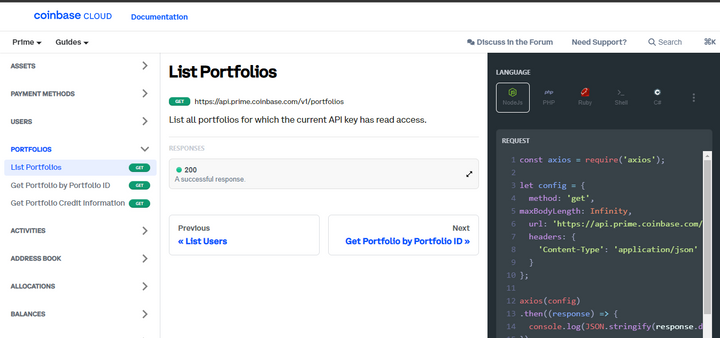
Coinbase API is a flexible and secure tool that supports
Bitcoin, Bitcoin Cash, Litecoin, and Ethereum coinbase . It provides excellent
wallet services with constant notifications about every transaction. The API
technology is based on Node.JS. Coinbase is popular because it can integrate
cryptocurrency with existing applications. With it, you can have
crypto functionality in an old app instead of discarding it and starting a new
one. Coinbase tools are free to use and have an hourly limit of 10,000
requests. There is also a premium option, Coinbase Pro, with a more advanced
API.
2. Bitcore:
Bitcore is a native interface for the Bitcoin network. It's
free, open source, and coded in JavaScript. It's a tool set necessary for
almost any Bitcoin-related application. It includes a node wallet and a Bitcoin
chain explorer and many useful libraries. It's easy to extend with additional
services, thanks to its modular architecture. Furthermore, Bitcore is a full
node, so applications on its API run on the P2P network. This means an
incredible performance of over 500 transactions per second.

3. Blockchain API:
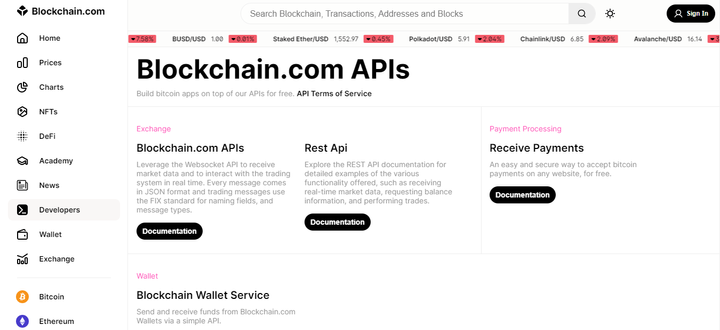
With a community of over 25,000 developers, Blockchain API
technology may be the oldest and the most popular API on the list.
Blockchain has API for wallets, payment processing, blockchain explorer, and
simple text query. Moreover, Blockchain API stores data on blocks and
transactions in JSON format. It has low timeouts and since it operates using web3 wallets
only it is more secure. This eliminates the need for additional
cryptocurrency storage.
4. Factom
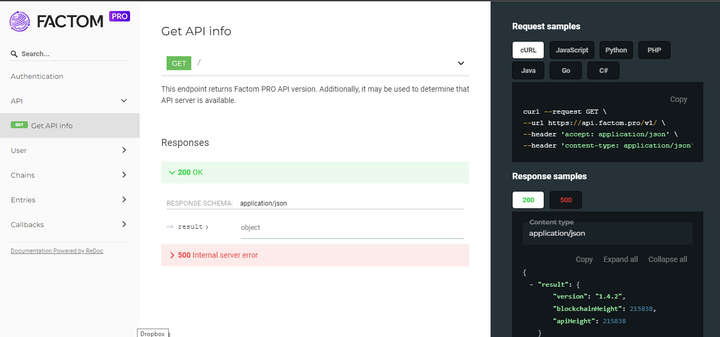
Factom is a company offering a truly innovative solution
that goes by the brand name Harmony Connect. It offers services for data
storage on its blockchain. This is helpful when you need to record tamper-proof
data for prolonged periods of time. This API has good integration with
existing software. Back blockchain can also run smart contracts. Another nice
feature of its blockchain is tokenization. You can create tokens that
represent real-world assets and trade them over the network. Factom seems like
a solution that can be very popular in the near future.
5. Web3.JS Ethereum API
Ethereum API Web3.JS is the primary API for the Ethereum
network. However, to use it you need to run your own client. You also can
use it if you're hosting instead and it has wallet support auto generates wrappers
for smart contracts from native Java code. It has support for both ERC 20 and
ERC 721 token standards.
Conclusion:
APIs are 'life-saving' tools for developers as they don't have to build entire systems from scratch. With increased Web3 adoption in the future, blockchain APIs will see increased usage. APIs are still for expert users and developers only; however, with the current trend shift, they should become more reliable, stable, and easy to use.
Discover more from CoinageReport
Subscribe to get the latest posts sent to your email.
This article is for informational purposes only and is not financial advice.


